How Does Can Seaming Work? First and Second Seaming Operations Explained
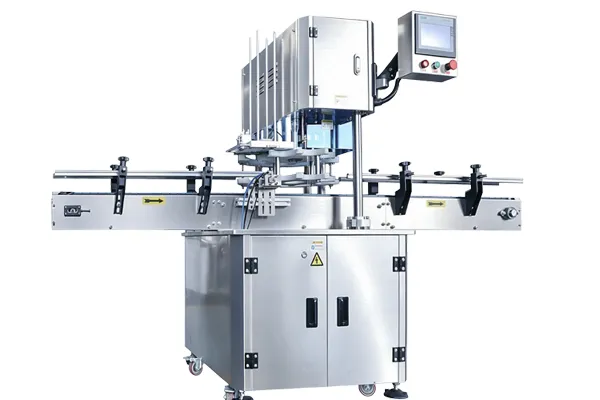
Improper can seaming can lead to leaks, product spoilage, and loss of package integrity. The first operation is especially important because it establishes the body hook and cover hook geometry. If these hooks are formed incorrectly, the second operation can compress the seam but cannot fully correct the underlying defect.
This article explains how the first and second seaming operations form a typical five-layer double seam. It also examines how can flange geometry, material thickness and hardness, sealing compound, and chuck-and-roll setup affect the final seam.
What Is Can Seaming?
Can seaming is a metal-forming process that joins a can body to its end, or lid. During this process, the body flange and end curl are mechanically interlocked and compressed to form a double seam. A typical double seam consists of five layers of metal—three from the end and two from the can body—although the structure may differ at areas such as the side-seam crossover.
A double seam is normally formed through two successive operations:
| Operation | Main Action | Result | Limitation |
|---|---|---|---|
| First Operation | Forms the can body flange and end curl into the body hook and cover hook. | Creates the initial loose interlock and establishes the hook geometry. | Does not compress the seam to its final dimensions. |
| Second Operation | Compresses the interlocked hooks against the seaming chuck. | Establishes the final seam profile and holds the sealing compound within the seam voids. | Cannot correct short, uneven, or improperly formed hooks from the first operation. |
Seam quality depends on the condition and compatibility of the can body, end, sealing compound, chuck, and seaming rolls. Incorrect hook formation, worn tooling, or improper machine settings can result in defects such as false seams, insufficient overlap, droops, or cutovers. For this reason, double-seam inspection is an essential part of quality control in food and beverage canning.
On an integrated packaging line, can seaming normally takes place after the product has been dispensed into the container. For more context on this upstream stage, see our guide to how filling machines work .
Which Parts of the Can and End Form a Double Seam?
A double seam begins with the can body flange and the end curl. During seaming, these edges are reshaped into the interlocked body hook and cover hook.
The Can Body Flange
The flange is the outward-flared edge at the top of the can body. During the first seaming operation, it is turned inward and upward to form the body hook.
The End Curl
The curl is the preformed outer edge of the can end, or lid. The first-operation roll guides the curl around the body flange, forming the cover hook, which is also called the end hook.
The Body Hook and Cover Hook
The body hook and cover hook overlap to create the internal interlock of the double seam. The first operation establishes their shape and overlap, while the second operation compresses them to the required final profile. Insufficient hook length or overlap can weaken the seam and increase the risk of leakage.
Match the Right Seamer to Your Can Format

What Happens During the First Seaming Operation?
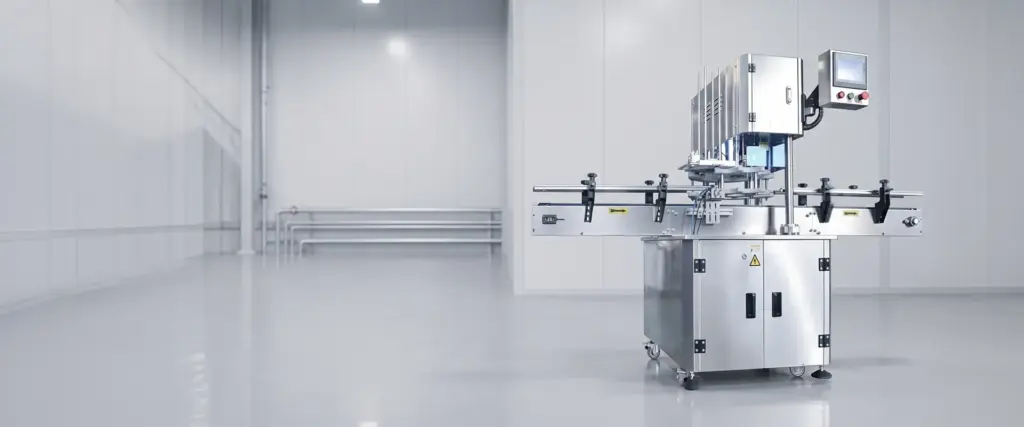
The first seaming operation forms the body hook and cover hook into a loose interlock, establishing the geometry required for final compression.
Forming the Initial Interlock
The can body and end are first clamped between the base plate and seaming chuck. The first-operation roll then follows its profiled path around the seam area. Depending on the machine design, either the can rotates against the roll or the roll travels around a stationary can.
As the roll engages, it guides the end curl inward to form the cover hook while turning the body flange into the body hook. The two hooks become mechanically interlocked but are not yet compressed to their final dimensions. The first operation therefore establishes the amount and position of material available for the completed seam.
What Should a First-Operation Seam Look Like?
A correctly formed first-operation seam should have:
- A continuous, rounded profile without sharp edges, fractures, or excessive scuffing.
- A body hook and cover hook that are properly formed and positioned for sufficient overlap.
- Controlled wrinkles in the cover hook without severe folds or irregularities.
- Consistent geometry around the circumference of the can.
The first operation should be evaluated against the approved specifications for the particular can body and end. A short hook, poor tuck, or uneven formation cannot normally be corrected by increasing compression during the second operation.
Which Setup Factors Affect the First Operation?
First-operation results are influenced by the can and end specifications as well as machine setup. Important factors include:
- The profile and condition of the first-operation roll.
- The match between the seaming chuck, roll, can body, and end.
- Chuck-to-roll clearance and base-plate pressure.
- Can flange dimensions and end-curl geometry.
- Tooling alignment, cleanliness, lubrication, and wear.
Routine inspection helps operators identify gradual changes caused by tooling wear or incorrect adjustment before they affect finished seam quality.
What Happens During the Second Seaming Operation?
The second seaming operation compresses the interlocked hooks to establish the final seam profile and hold the sealing compound within the seam voids.
Compressing the Interlocked Hooks
After the first-operation roll retracts, the second-operation roll engages the partially formed seam. Its flatter groove profile presses the body hook and cover hook against the seaming chuck, reducing wrinkles and compressing the layers to their specified final dimensions.
This compression holds the sealing compound within the prime sealing area and other internal voids. The compound supplements the mechanical interlock by helping prevent leakage through spaces where metal-to-metal contact alone would not provide an effective closure.
Why the Second Operation Cannot Correct Poor Hook Formation
The second operation compresses the structure created during the first operation; it does not rebuild the hooks. If the body hook or cover hook is too short, uneven, or incorrectly positioned, additional second-operation pressure cannot restore the missing overlap. Excessive pressure may instead create other defects, including an overly tight seam, damaged coating, cutovers, or metal fractures.
Final seam quality therefore depends on both operations, along with correct can and end dimensions, suitable sealing compound, and properly matched tooling.
What Should Be Checked After the Second Operation?
| Inspection Item | What to Check | What It Helps Evaluate |
|---|---|---|
| External Dimensions | Seam thickness, seam length, and countersink depth | Whether the finished seam dimensions are within approved limits |
| Hook Engagement | Body-hook length, cover-hook length, and overlap | Whether the hooks are sufficiently formed and interlocked |
| Wrinkles and Tightness | Remaining cover-hook wrinkles and the applicable tightness rating | The degree of compression achieved during the second operation |
| Pressure Ridge | Its continuity and condition where required by the seam specification | Supporting evidence of compression around the seam |
| Visible Defects | False seams, droops, sharp seams, cutovers, or fractures | Localized forming, setup, tooling, or component problems |
Acceptance limits vary by can body, end, material, and tooling combination. Finished seams should therefore be assessed against the specifications provided or approved for the particular container system rather than against a single universal measurement.
How Do the Chuck and Seaming Rollers Work Together?

The seaming chuck supports the can end and helps define the internal seam profile, while the first- and second-operation rolls form and compress the double seam.
During seaming, the can body and end are held firmly against the chuck by the base plate. The chuck provides internal support and maintains the position of the end while the rolls apply controlled forming pressure from the outside.
The relative movement depends on the machine design. In a can-spin seamer, the can and chuck rotate while the rolls move into contact with the seam. In a stationary-can seamer, the can remains still while the rolls travel around it. Both designs perform the same two forming operations.
| Component | Role in Seam Formation |
|---|---|
| Seaming Chuck | Supports the can end and helps define the internal seam profile. |
| Base Plate | Holds the can body and end firmly against the chuck during seaming. |
| First-Operation Roll | Forms the body hook and cover hook into a loose interlock. |
| Second-Operation Roll | Compresses the interlocked hooks to their specified final dimensions. |
The chuck and rolls must be matched to the specific can body and end profile. Incorrect clearances, worn roll grooves, poor alignment, or insufficient base-plate pressure can produce uneven hooks, inadequate overlap, or other seam defects. Tengzhuo’s can seaming machines are available in configurations for different can materials, formats, products, and production requirements.
Which Can and End Details Affect Seam Formation?
Seam quality depends not only on machine adjustment but also on the geometry, material, and condition of the can body and end.
Even a correctly adjusted seamer cannot consistently produce an acceptable seam from damaged or incompatible components. Before production, the can body, end, and sealing compound should be checked against the approved container specifications.
Can Flange and End-Curl Geometry
The body flange and end curl provide the material that forms the two hooks. Important factors include:
- Flange width, angle, and consistency, which influence body-hook formation.
- End-curl diameter and profile, which affect how the cover hook forms around the body flange.
- End countersink geometry, which must match the chuck and approved seam specification.
- Damage such as bent flanges, incomplete curls, or dents near the seam area.
Incorrect or inconsistent geometry can lead to short hooks, inadequate overlap, false seams, droops, or other localized defects.
Material Thickness and Temper
Body-plate and end-plate thickness affect the expected dimensions of the completed seam. Material temper also influences how the metal bends and compresses under the seaming rolls.
A change in material thickness, temper, coating, or end supplier may require the tooling and machine settings to be reviewed. Components should not be treated as interchangeable solely because their nominal diameter is the same.
Sealing Compound
Sealing compound is normally applied within the end curl to fill voids that remain after mechanical seam formation. Its placement, amount, and properties must be suitable for the can and end system.
Too little or poorly positioned compound may leave sealing voids, while excessive compound can interfere with seam formation or be squeezed from the seam. Compound condition and application should therefore be checked against the end supplier’s specifications.
Component Condition and Cleanliness
Cans and ends should reach the seamer without damage or contamination. Common concerns include:
- Bent, dented, or distorted bodies and ends.
- Burrs, damaged coatings, rough edges, or incomplete curls.
- Product or foreign material trapped on the flange or within the end curl.
- Irregularities at the side-seam crossover on three-piece cans.
- Inconsistent component dimensions between production batches.
Incoming inspection and controlled component handling help prevent defects that cannot be corrected through seamer adjustment alone. Product on the flange may also result from upstream filling problems such as splashing, foaming, dripping, or inconsistent container positioning. Our guide to filling machine accuracy issues explains how product characteristics, machine setup, and worn components can affect filling consistency before containers reach the seamer.
How Is a Finished Can Seam Inspected?
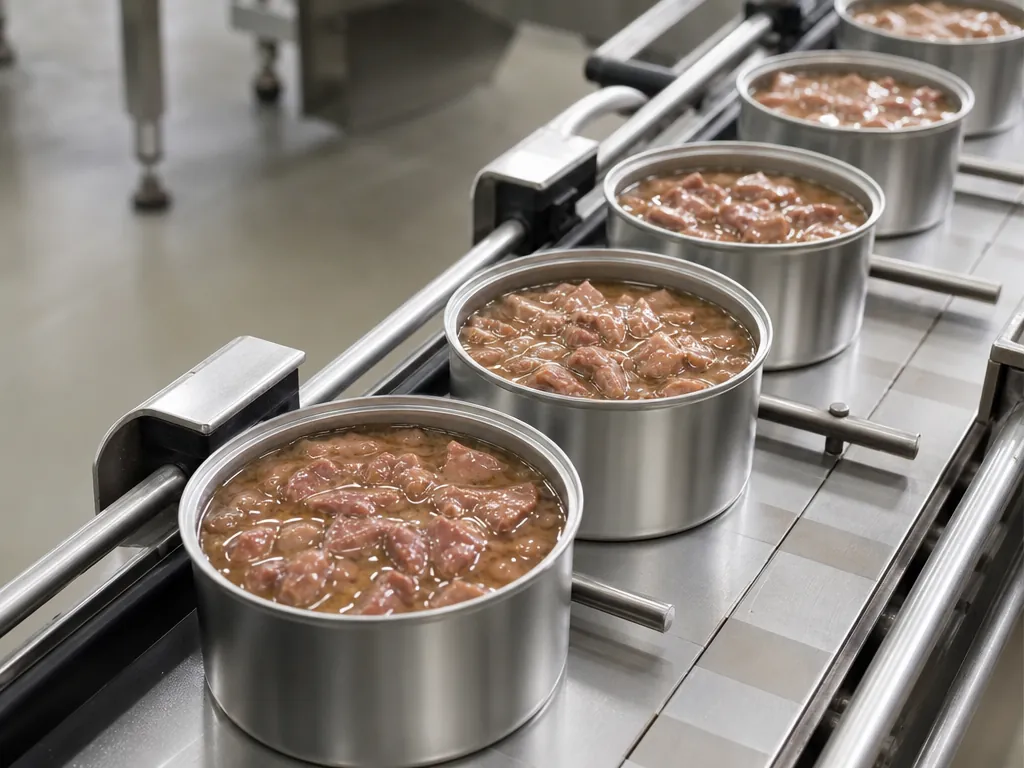
Finished seams are evaluated through visual inspection, external measurements, and internal examination. Results must be compared with the approved specifications for the particular can body and end.
The FDA’s inspection guide for low-acid canned food manufacturers explains how first- and second-operation seams are formed and outlines common methods used to evaluate finished double seams.
Visual Inspection and External Measurements
Inspection begins with a visual and tactile check around the full circumference of the seam. Operators look for visible defects such as droops, false seams, sharp seams, cutovers, fractures, or other irregularities.
Calibrated tools such as a seam micrometer and countersink gauge are then used to measure external dimensions, including seam thickness, seam length, and countersink depth. Measurements should be taken at the locations and frequency defined in the plant’s inspection procedure. Requirements can vary by can design, particularly around side-seam crossovers or non-round containers.
Destructive Teardown
A seam teardown exposes the body hook and cover hook for internal evaluation. Depending on the approved inspection method, inspectors may assess:
- Body-hook and cover-hook length.
- Hook engagement and calculated overlap.
- Cover-hook wrinkles and tightness.
- Pressure-ridge condition.
- Internal droops or other hidden defects.
These findings provide information that cannot be obtained through external measurements alone. However, no single measurement proves seam integrity by itself. The results should be considered together with visual observations and the can and end supplier’s specifications.
Cross-Sectional and Optical Examination
For direct examination of hook engagement, a small section of the seam can be cut and viewed with a seam projector, scope, or digital seam-analysis system. This method can measure actual overlap and reveal internal conditions that may not be apparent during an external inspection.
Optical examination is useful for setup verification, troubleshooting, and maintaining inspection records. The equipment must be calibrated, and the results must still be evaluated against the approved limits for the specific can, end, and tooling combination.
Frequently Asked Questions
What is a double seam?
A double seam is the mechanically interlocked and compressed closure that joins a can body to its end. A typical double seam contains five layers of metal—three from the end and two from the body—and uses sealing compound to fill internal voids and support a hermetic closure.
How does a can seaming machine work?
A can seaming machine holds the can body and end against a seaming chuck while two forming operations create the double seam. The first-operation roll forms the body hook and cover hook into a loose interlock, and the second-operation roll compresses them to the specified final profile to produce a hermetic closure.
How is a can seam checked?
A can seam is checked through visual inspection, external dimensional measurements, and internal examination. Inspectors look for visible defects, measure dimensions such as seam thickness and length, and use teardown or cross-sectional analysis to assess the hooks, overlap, wrinkles, and tightness. Results are compared with the approved specifications for the specific can body and end.
Final Thoughts
A reliable double seam depends on both stages of the process. The first operation forms the body hook and cover hook, while the second compresses them to the required final profile. Neither operation can be evaluated in isolation, and machine settings cannot compensate for damaged or incompatible can components.
Consistent results require the can body, end, sealing compound, chuck, and seaming rolls to be properly matched and verified through routine inspection. Contact our team with your can material, dimensions, end specifications, product, and target speed so we can recommend a suitable can seaming machine and tooling configuration.

Continue Reading
Explore more insights from our packaging machinery experts
Semi-Automatic vs. Automatic Can Seaming Machines: What Is the Difference?
Compare semi-automatic vs. automatic can seamers by labor, output, changeovers, footprint, and line integration. Choose the right system—request a quote.
Read Article
Types of Capping Machines and How to Choose the Right One
Compare the main types of capping machines, including screw, snap, vacuum, ROPP, and crown cappers. Match your closure and output—request a solution.
Read Article
Shrink Sleeve Labels vs. Pressure-Sensitive Labels: What Is the Difference?
Compare shrink sleeve vs. pressure-sensitive labels by coverage, design, equipment, durability, and changeovers. Choose the right labeling system for your line.
Read ArticleReady to Upgrade Your Packaging Line?
Get in touch with our engineers for a free consultation and tailored equipment proposal within 24 ساعات.
Get a Free 3D CAD Line Layout Design
- Factory-Direct Pricing
- Fast Turnaround Time
- Top-Tier Global Components
- Dedicated After-Sales Support


