Shrink Sleeve Labels vs. Pressure-Sensitive Labels: What Is the Difference?
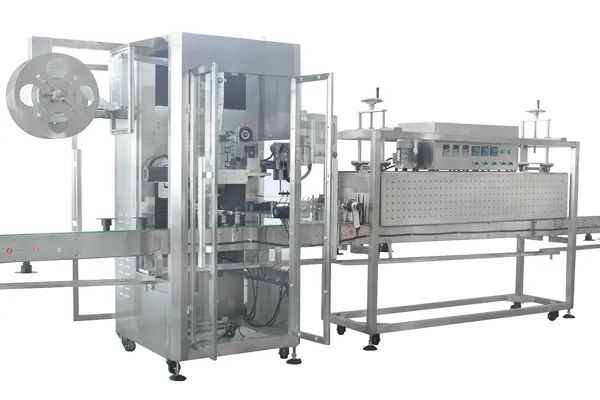
Choosing between shrink sleeve and pressure-sensitive labels affects container coverage, artwork design, application equipment, changeover requirements, and overall production cost. The right option depends on the container’s shape and material, the required label area, expected operating conditions, and whether tamper-evident features are needed.
This guide compares shrink sleeve vs. pressure-sensitive labels in terms of coverage, shape compatibility, graphic design, durability, application process, and production flexibility. It will help packaging buyers determine which labeling method is more suitable for their containers and production lines.
What Are Shrink Sleeve and Pressure-Sensitive Labels?
Shrink sleeves use heat to conform printed film around a container, while pressure-sensitive labels use an adhesive layer to bond the label to the container surface.
Shrink Sleeve Labels: Full-Body Coverage Through Heat
A shrink sleeve is a printed film formed into a tube and placed over a container. The container then passes through a steam or hot-air tunnel, where controlled heat causes the film to shrink around its shape. Shrink sleeves can provide 360-degree graphics and extend across the body, shoulder, neck, or closure, depending on the package design. They are often considered for contoured containers or applications that require a larger decoration area.
Pressure-Sensitive Labels: Adhesive Bonding on Application
A pressure-sensitive label consists of a printable facestock, an adhesive layer, and a release liner. During application, the label is separated from the liner and pressed onto the container without requiring a heat tunnel. Pressure-sensitive labels can be applied as front, back, or wraparound labels and are commonly used on containers with suitable labeling panels. Their performance depends on the label material, adhesive, container surface, curvature, and operating environment.
How Much of the Container Can Each Label Cover?
Shrink sleeves can provide full-body decoration, while pressure-sensitive labels are generally applied as front, back, or wraparound panels. Actual coverage depends on the container and label design.
Comparison Point Shrink Sleeves Pressure-Sensitive Labels Typical Coverage Can provide continuous, full-body or partial-body decoration around the container. Commonly applied as separate front and back labels or as a wraparound label. Shaped Areas Can extend across the body, shoulder, neck, and other shaped areas, depending on the sleeve and container design. Usually occupies a defined labeling area rather than following the container’s entire profile. Complex Shapes Can follow curves, tapers, waists, and changes in container diameter, subject to film and shrink-process limitations. May work on curved containers when the label size, facestock, adhesive, and surface geometry are compatible. Key Design Factors Coverage depends on sleeve dimensions, container geometry, artwork layout, and areas that must remain uncovered. Coverage depends on container curvature, labeling-panel size, label material, adhesive, and application equipment. Production Verification Test sleeve fit, graphic distortion, and shrink performance on the intended container. Test label placement, adhesion, wrinkling, bubbling, and edge lifting on the intended container.
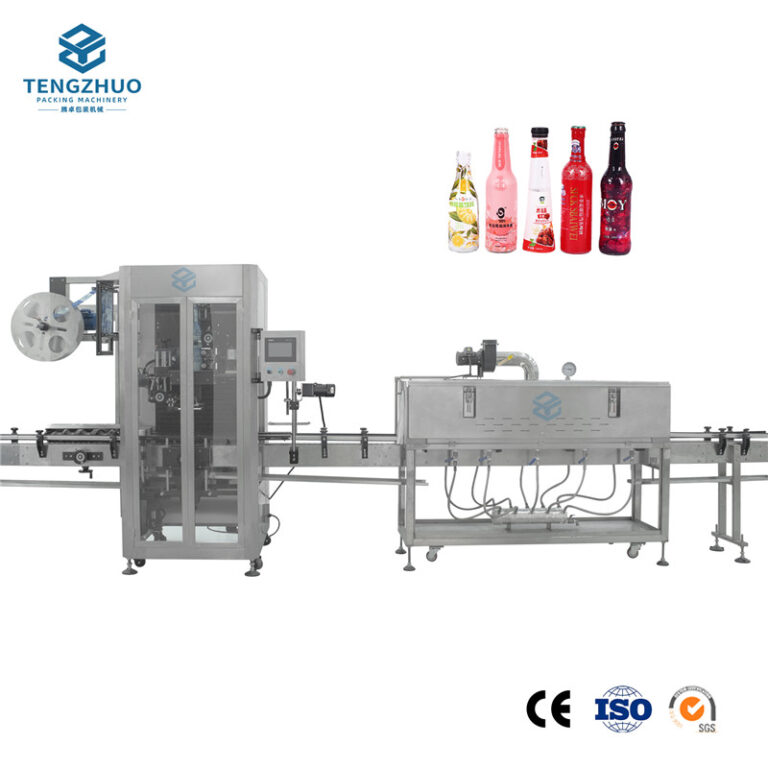
Match the Right Shrink Sleeve System to Your Container
How Do the Two Labeling Methods Affect Graphic Design?
Shrink sleeves provide a continuous wraparound design area but may require artwork distortion control. Pressure-sensitive labels use defined panels and offer a wide choice of facestocks and finishes.
Canvas Size and Branding Space
Shrink sleeves can provide a continuous design area around the container, giving brands more room for graphics, product information, instructions, and multilingual content. The artwork may extend across the body, shoulder, or neck, depending on the sleeve and container design.
Pressure-sensitive labels are normally designed as front, back, or wraparound panels. This creates clearer boundaries for individual design elements and may leave part of the container visible. Available space depends on the label dimensions and the size of the container’s suitable labeling area.
Shape Compatibility and Artwork Distortion
Shrink-sleeve artwork may need to be pre-distorted because different areas of the film can shrink by different amounts around shoulders, waists, tapers, and other changes in diameter. The required distortion depends on the container geometry, film properties, sleeve orientation, and heat-tunnel settings.
Logos, small text, barcodes, and other elements that require dimensional accuracy should be positioned in relatively stable areas whenever possible. Final artwork should be checked using printed sleeve samples and production-equivalent shrink tests.
Pressure-sensitive artwork generally experiences less dimensional change during application. However, label size, facestock flexibility, adhesive selection, and container curvature must still be considered to reduce wrinkling, bubbling, edge lifting, or misalignment.
Material Finishes and Special Effects
Pressure-sensitive labels are available with paper and film facestocks that can support effects such as textured surfaces, metallic finishes, foil stamping, embossing, matte coatings, and clear “no-label look” designs. The available options depend on the printing process, facestock, adhesive, and order requirements.
Shrink sleeves can support full-body gloss, matte, metallic, opaque, or transparent effects. Reverse printing can place the graphics behind the film, helping protect the printed image from handling and abrasion. Material and finish choices should also account for shrink performance, recyclability requirements, container color, and the intended storage environment.
How Do Tamper-Evidence Requirements Affect Label Selection?
Shrink bands can provide visible evidence around a cap or closure, while pressure-sensitive security labels can protect a specific opening point, seam, or flat surface.
Shrink Sleeves and Bands Around Closures
A shrink band can extend across the container neck and closure so that it must be torn or removed before the package is opened. Perforations may be added to define the opening point and make removal easier.
Shrink bands are commonly considered for bottles, jars, and other packages that require visible evidence around the closure. A full-body shrink sleeve may also extend over the cap, allowing decoration and tamper evidence to be combined. However, the sleeve design, perforation pattern, container shape, and opening method must be tested together.
Pressure-Sensitive Security Labels
Pressure-sensitive security labels are applied across a lid joint, carton flap, cap edge, or another defined opening point. Depending on their construction, they may tear, delaminate, fracture, or leave a visible message or residue when removed.
These labels can be used as a separate security feature or incorporated into the primary label design. Their performance depends on the facestock, adhesive, application surface, storage conditions, and the amount of time allowed for the adhesive to bond.
What Should Be Considered Before Selection?
- Seal location: Determine whether visible evidence is needed around the entire closure or only across a specific opening point.
- Container geometry: Check whether the selected material can follow the neck, lid, seam, or panel without lifting or distorting.
- Opening experience: Confirm that the feature produces a clear indication of opening while remaining practical for the intended user.
- Application equipment: Shrink bands require sleeve application and controlled heating, while pressure-sensitive security labels require a suitable label applicator.
- Regulatory requirements: Identify the rules that apply to the product category and target market. For example, 21 CFR §211.132 defines tamper-evident packaging requirements for certain over-the-counter human drug products in the United States. One label format should not be assumed to satisfy every market or product requirement.
- Production testing: Test the label on the final container under the intended filling, storage, transport, and opening conditions.
How Do Materials and Container Conditions Affect the Choice?

Container geometry, surface properties, heat sensitivity, moisture, and chemical exposure all affect whether a shrink sleeve or pressure-sensitive label will perform reliably.
Container Shape and Surface Geometry
Shrink sleeves can accommodate curves, tapers, waists, and changes in container diameter, making them suitable when decoration must extend beyond a conventional labeling panel. However, achievable coverage depends on the film, sleeve dimensions, container geometry, and shrink process. Deep recesses or abrupt changes in diameter may still cause distortion, bridging, or uneven shrinkage.
Pressure-sensitive labels generally work best where the container provides a stable labeling area. Their suitability for curved surfaces depends on the label size, facestock flexibility, adhesive, surface energy, and degree of curvature. Container samples should be tested instead of applying a universal curvature limit.
Container Material and Heat Sensitivity
Shrink-sleeve application exposes the container and product to controlled heat or steam. The container must therefore remain dimensionally stable under the selected tunnel conditions. Thin-walled plastic containers, temperature-sensitive products, and packages with limited internal pressure may require careful process testing or a different tunnel configuration.
Pressure-sensitive labels do not require a heat tunnel, but adhesion depends on the container material and surface condition. Low-surface-energy plastics, coatings, mold-release residue, condensation, dust, and uneven surfaces can reduce bond strength. Glass, metal, PET, HDPE, and other substrates should each be evaluated with the proposed adhesive and label construction.
Moisture, Chemicals, and Product Exposure
Labels used in refrigerated, wet, oily, or chemical environments must be selected for those conditions. Shrink-sleeve performance depends on the film, ink system, print orientation, seams, and any protective coating; the sleeve format alone does not guarantee resistance to moisture or chemicals.
Pressure-sensitive labels may require film facestocks, moisture-resistant printing, compatible adhesives, or protective laminates for cold-chain, washdown, oil, or chemical exposure. Testing should consider application temperature, service temperature, condensation, abrasion, product contact, storage time, and transportation conditions.
How Do Application and Changeover Requirements Compare?
Pressure-sensitive and shrink-sleeve systems use different application processes. Equipment scope, utilities, format parts, and setup requirements should be compared using the intended containers and labels.
Core Application Process and Equipment
A pressure-sensitive labeling system separates the label from its release liner and applies it to the container using controlled pressure. Depending on the label position and container shape, the line may include applicator heads, wrapping belts, rollers, container-spacing devices, sensors, and inspection equipment. It does not require a shrink tunnel.
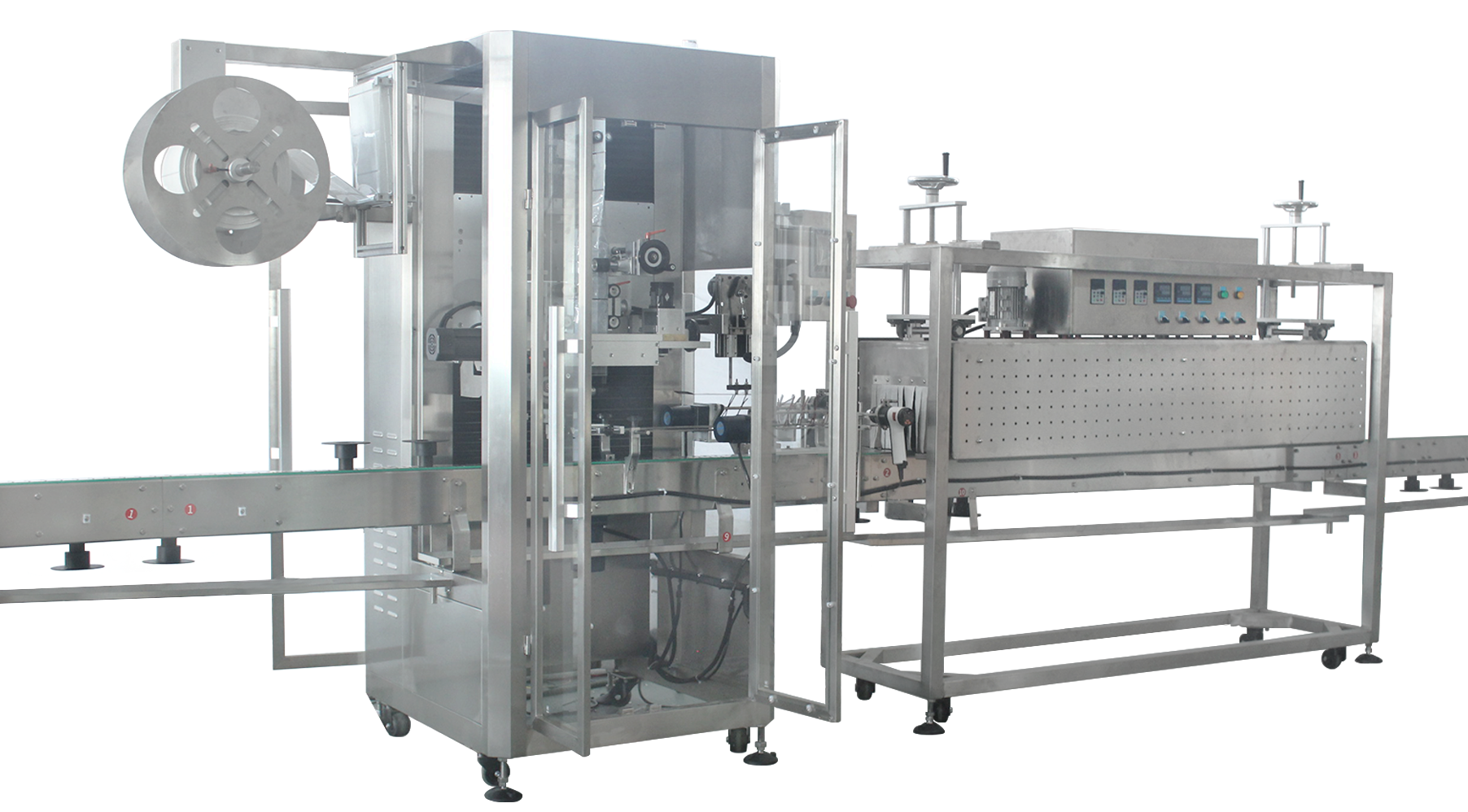
A shrink sleeve labeling system places a cut film sleeve over the container before it passes through a steam or hot-air tunnel. The complete system may include a sleeve applicator, cutting unit, center mandrel, conveyor, shrink tunnel, and supporting utilities. The required floor space and utility connections depend on the applicator and tunnel configuration.
Changeover Speed and Complexity
A pressure-sensitive label changeover may involve replacing the label roll, loading a new recipe, adjusting guides and applicator positions, and checking label placement. Additional adjustments may be required when the container dimensions, label size, or application position change.
A shrink-sleeve changeover may involve replacing the film roll, changing or adjusting the center mandrel and cutting settings, loading a recipe, and confirming the tunnel conditions. A new artwork SKU using the same container and sleeve dimensions may require fewer adjustments than a change involving a different bottle shape or film.
Changeover time should therefore be confirmed for the actual format combinations rather than assumed from the labeling method alone.
Operator Skill and Process Sensitivity
Both systems require correct web handling, container spacing, sensor setup, and label-position control. Pressure-sensitive applications also depend on surface condition, adhesive compatibility, web tension, and applicator alignment.
Shrink-sleeve performance additionally depends on film orientation, cut length, sleeve position, conveyor speed, and heat distribution. Operators should be able to identify problems such as wrinkles, distorted graphics, uneven shrinkage, incorrect cut positions, and folded sleeve edges. The required operator skill depends on the level of automation and the number of product formats handled.
Which Labeling Method Fits the Project?
The appropriate method depends on container geometry, required coverage, label construction, operating environment, equipment scope, and changeover needs.
| Factor | Shrink Sleeves | Pressure-Sensitive Labels |
|---|---|---|
| Best Suited For | Curved, tapered, or irregular containers | Containers with flat or gently curved labeling areas |
| Coverage | Full-body, partial-body, or closure coverage | Front, back, or wraparound labeling |
| Equipment | Sleeve applicator and steam or hot-air tunnel | Pressure-sensitive label applicator; no heat tunnel |
| Changeover | May require film, mandrel, cutter, and tunnel adjustments | Usually involves label-roll, guide, and applicator adjustments |
| Cost Factors | Film, tooling, tunnel, utilities, and production speed | Label material, adhesive, applicator setup, and production speed |
Frequently Asked Questions
What is the difference between shrink sleeve and pressure-sensitive labels?
Shrink sleeves are printed film tubes that use controlled heat to conform around a container and can provide full-body decoration. Pressure-sensitive labels use an adhesive layer to bond to a defined area of the container without a shrink tunnel. The appropriate choice depends on the required coverage, container shape, label material, application equipment, and operating environment.
Are shrink sleeve labels suitable for irregular bottles?
Shrink sleeves can be suitable for irregular, tapered, or contoured bottles because the film shrinks around changes in container shape. However, performance depends on the container geometry, sleeve material, artwork distortion, and heat-tunnel settings. Production samples should be tested because deep recesses or abrupt diameter changes may still cause uneven shrinkage or graphic distortion.
Can pressure-sensitive labels cover an entire container?
A pressure-sensitive label can wrap around the full circumference of a straight-sided container, but it usually covers a defined labeling panel rather than the entire package from top to bottom. Coverage across shoulders, necks, or major changes in diameter is more difficult and depends on the facestock, adhesive, label dimensions, and container geometry. Shrink sleeves may be considered when continuous decoration over these areas is required.
Do shrink sleeve labels require a heat tunnel?
In industrial production, shrink sleeves normally pass through a steam, hot-air, or other controlled-heat tunnel after application. The heat causes the film to shrink around the container. Tunnel selection and settings depend on the sleeve material, container geometry, product sensitivity, and line speed. Pressure-sensitive labels are applied with pressure and do not require a shrink tunnel.
Which labeling method is easier to change over?
Pressure-sensitive labeling often requires fewer changeover steps when the container and label position remain similar. A change may involve replacing the label roll, loading a recipe, and adjusting guides or applicator settings. Shrink-sleeve changeovers may also require mandrel, cutter, sleeve-position, and tunnel adjustments. Actual changeover time depends on the equipment design and whether the container, label dimensions, or material changes.
Final Thoughts
Shrink sleeves and pressure-sensitive labels suit different packaging and production requirements. Shrink sleeves can provide broader coverage and accommodate more complex container shapes, while pressure-sensitive labels use a heat-free application process and may offer simpler equipment requirements for suitable labeling areas. The final choice should reflect the container geometry, label material, artwork, operating environment, tamper-evidence needs, changeover frequency, and available line equipment.
Before approving a label format, test it on the final container under the intended application, storage, and transportation conditions. Contact our team to review your container dimensions, label requirements, and target output and identify a suitable labeling configuration for your production line.

Continue Reading
Explore more insights from our packaging machinery experts
Semi-Automatic vs. Automatic Can Seaming Machines: What Is the Difference?
Compare semi-automatic vs. automatic can seamers by labor, output, changeovers, footprint, and line integration. Choose the right system—request a quote.
Read Article
Types of Capping Machines and How to Choose the Right One
Compare the main types of capping machines, including screw, snap, vacuum, ROPP, and crown cappers. Match your closure and output—request a solution.
Read Article
How Much Does a Filling Machine Cost?
Learn what drives filling machine cost, from automation and output to materials, cleaning, and line scope. Compare quotations and request a tailored quote today.
Read ArticleReady to Upgrade Your Packaging Line?
Get in touch with our engineers for a free consultation and tailored equipment proposal within 24 hours.
Get a Free 3D CAD Line Layout Design
- Factory-Direct Pricing
- Fast Turnaround Time
- Top-Tier Global Components
- Dedicated After-Sales Support


