Types of Capping Machines and How to Choose the Right One
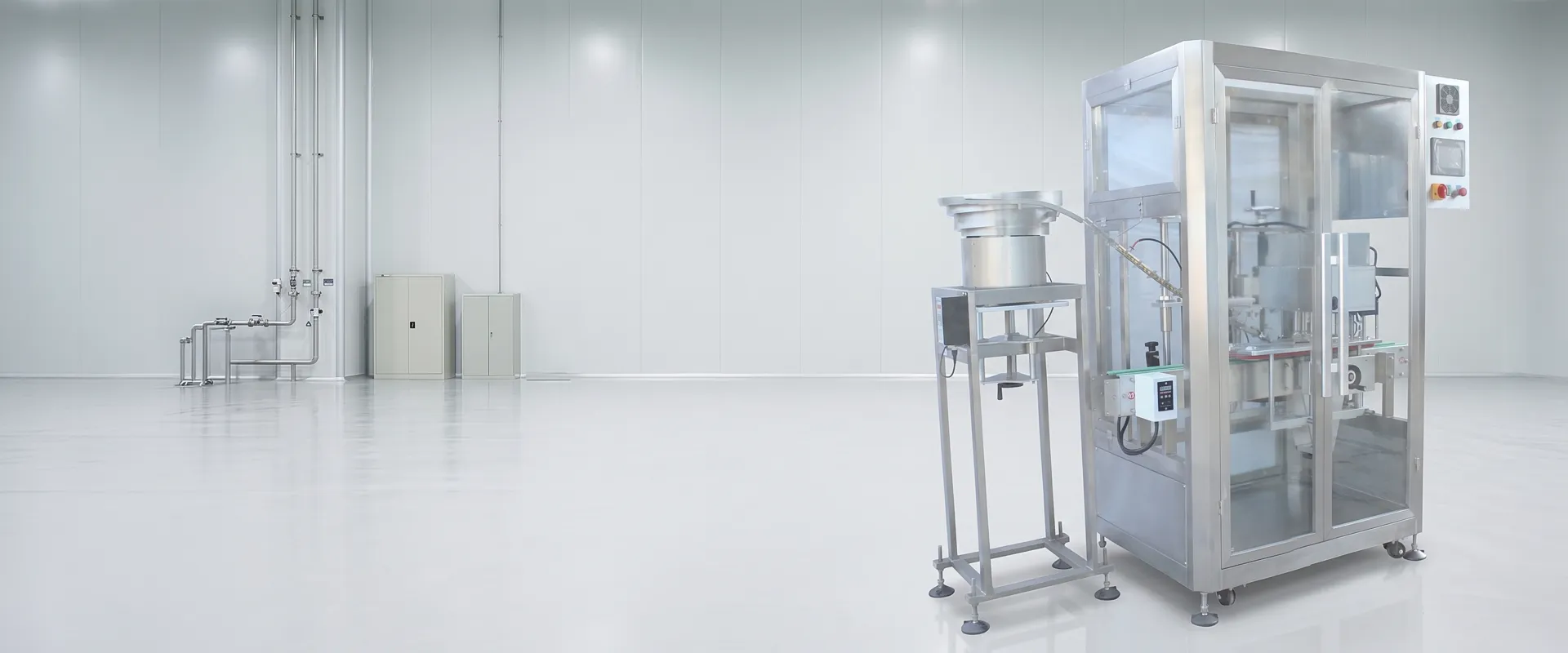
Choosing among the different types of capping machines starts with the closure and container. Screw caps, snap-on closures, and vacuum-sealed lids use different application methods, so selecting the wrong equipment can result in loose caps, damaged containers, leakage, or production interruptions.
This guide compares screw, snap, press-on, and vacuum capping machines. It explains how closure design, container material, application torque or force, production speed, and changeover requirements affect machine selection, helping buyers identify a suitable solution for their packaging line.
What Does a Capping Machine Do?
A capping machine feeds, places, and secures closures onto containers using the application method required by the cap design.
Key Operations in the Capping Process
An automatic capping system coordinates several operations as containers move through the production line:
- Cap feeding: A bowl, elevator, or other feeding system sorts and orients the closures.
- Cap placement: Each closure is transferred or presented to the container in the correct position.
- Closure application: The machine applies rotational torque, downward pressure, forming force, or vacuum-assisted tightening, depending on the closure.
- Quality inspection: Optional sensors or inspection systems can check cap presence, position, height, and other specified acceptance criteria.
The exact sequence and equipment configuration depend on the cap, container, required output, and level of automation.
What Are the Main Types of Capping Machines?
Capping machines are classified by how they apply a particular closure. The correct type depends primarily on the cap design, container finish, required application method, and production speed.
| Machine Type | Suitable Closures | Application Method | Typical Packages |
|---|---|---|---|
| Screw Capper | Threaded plastic or metal caps | Applies rotational force using spindle wheels or a chuck head | Bottles and jars for food, beverages, cosmetics, and chemicals |
| Snap or Press-On Capper | Snap caps, plugs, inserts, and overcaps | Uses controlled downward force to seat the closure | Food, beverage, cosmetic, and household-product containers |
| Vacuum Capper | Metal lug or twist-off closures | Establishes or maintains reduced headspace pressure during closing | Glass jars and bottles for sauces, jams, pickles, and condiments |
| ROPP Capper | Unthreaded aluminum ROPP closures | Forms the closure around the container finish using rollers | Beverage, edible-oil, spirits, and pharmaceutical bottles |
| Crown Capper | Metal crown closures | Compresses and crimps the crown around the bottle finish | Glass bottles for beer, soft drinks, and other beverages |
These categories describe methods for applying preformed closures to bottles and jars. Each machine type may be supplied as a manual, semi-automatic, automatic inline, or rotary system, depending on the required output and production setup. Metal cans that use double seams require different equipment and tooling; see our guide to the can seaming process for an explanation of first- and second-operation seam formation.
How Does a Screw Capping Machine Apply a Closure?
A screw capping machine places a threaded cap onto a compatible container and applies controlled rotational force to seat it correctly.
Controlled Torque Application
Before tightening begins, the cap must be correctly fed, placed, and aligned with the container threads. The capping head or spindle wheels then rotate the closure and apply torque as it travels down the neck finish.
The method of controlling torque depends on the machine design. Chuck cappers may use mechanical clutches, magnetic clutches, or servo-driven heads, while spindle cappers use adjustable rotating wheels and container-handling components. The target application torque should be established from the closure supplier’s recommendations and verified using the production cap, liner, and container.
Insufficient torque may leave the cap loose or allow leakage, while excessive torque can damage the closure, liner, threads, or container neck. Machine settings should therefore be confirmed through application-torque testing rather than relying on one universal value.
When Is a Vacuum Capping Machine Used?
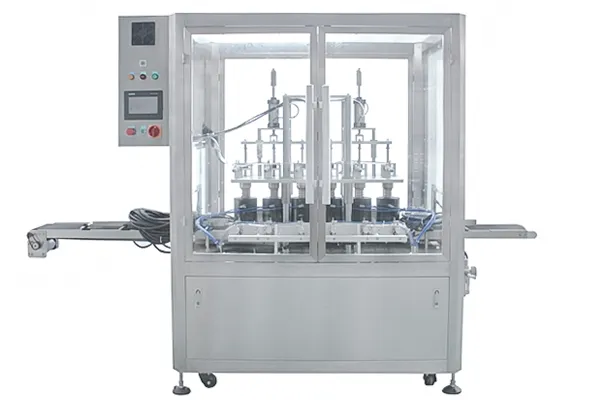
A vacuum capping machine is commonly used with rigid glass jars or bottles and compatible metal closures when the packaging process requires reduced headspace pressure and a secure closure.
Suitable Products and Packaging Formats
Vacuum capping is widely used for products packed in glass containers with metal lug or twist-off closures. Typical applications include sauces, jams, pickles, condiments, preserves, and other foods whose packaging process is designed to establish and maintain a vacuum after closing.
The container and closure must be designed to work together under the intended vacuum conditions:
- Rigid glass jars and bottles are commonly used because they can withstand the selected vacuum level without collapsing.
- Metal lug or twist-off closures may use a compatible sealing compound or liner to form a seal against the container finish.
- The cap dimensions, lug design, liner, and glass finish must be matched and tested as a complete package.
- Flexible or thin-walled containers may deform under vacuum and require a different closure process or additional support.
Product Protection and Vacuum Indication
Reducing the amount of air in the headspace may help limit oxidation and preserve characteristics such as flavor, color, and aroma. However, vacuum capping does not replace the thermal process, formulation controls, sanitation procedures, or other preservation measures required for the product.
Some metal closures include a safety button that remains depressed while the package retains its intended internal vacuum and rises after the vacuum is released. This provides consumers with visible or audible evidence that the vacuum condition has changed. It should not be treated as independent proof of product safety.
The complete package should be evaluated through closure-fit checks, vacuum measurements, leak testing, thermal-process validation where applicable, and storage trials before commercial production.
How Do Snap and Press-On Capping Machines Work?
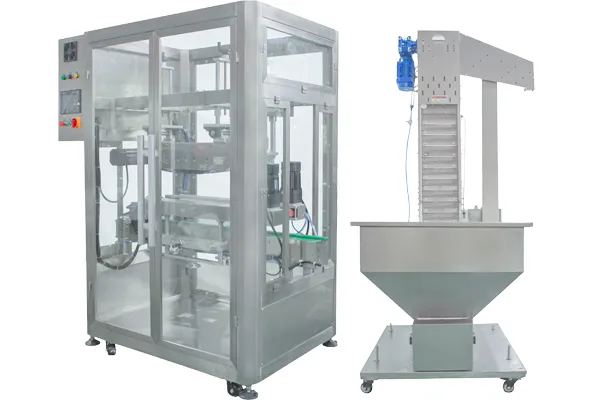
Snap and press-on capping machines apply controlled downward force to seat non-threaded closures. A snap closure locks over a retaining feature, while a press-on closure may rely on friction, interference fit, or a specified seating depth.
Container and Closure Positioning
Filled containers enter the capping station on a conveyor and are spaced using guides, timing screws, starwheels, or other handling components. The machine must keep each container stable and position the closure directly above its opening.
In an automatic system, a bowl, elevator, or other feeder sorts and orients bulk closures before delivering them through a chute or transfer mechanism. Depending on the closure and line design, the container may pick up the cap from the chute, or a placement device may set it onto the container.
Applying Controlled Downward Force
A snap or press-on capping machine may use a press head, compression belt, or roller assembly to apply downward force and seat the closure. Snap caps flex over a retaining bead or neck feature and lock into position. Other press-on closures, such as plugs, overcaps, and inserts, may instead be pressed to a specified depth without producing a distinct snap.
The required force and container support depend on the closure geometry, container material, neck strength, and seating requirements. Insufficient force may leave the closure partially seated or tilted, while excessive force can deform the cap or damage the container.
After application, the container is released to downstream operations. Optional inspection systems can check cap presence, seating height, alignment, or other defined acceptance criteria.
How Do Torque, Seal Requirements, and Output Affect the Choice?
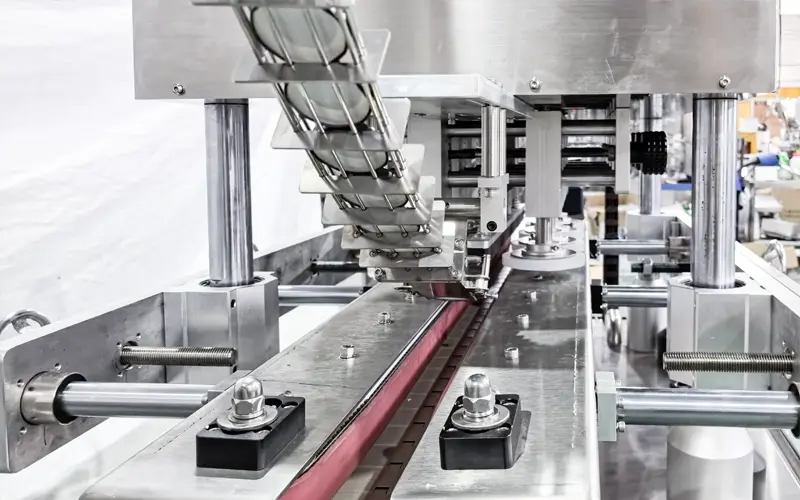
Capping equipment should be selected according to the required application torque or force, the closure and sealing system, and the sustained output of the complete production line.
These factors must be evaluated together. A machine may be capable of high speed but still be unsuitable if it cannot apply the specified closure consistently or integrate with the upstream and downstream equipment.
The Role of Torque in Machine Selection
For threaded closures, application torque affects how securely the cap is seated. Insufficient torque may leave the closure loose or prevent the liner from contacting the container finish correctly. Excessive torque can deform the liner, strip the threads, crack the closure, or damage the container neck.
There is no universal torque value for a particular product or industry. The target range should be established using the closure supplier’s specifications and verified with the production cap, liner, and container. The required control method may involve an adjustable mechanical clutch, magnetic clutch, spindle-wheel system, or servo-driven capping head, depending on the application and acceptable variation.
Application torque and removal torque are not the same measurement. Buyers should therefore define the test method, units, conditioning time, sampling procedure, and acceptance limits before evaluating machine performance. For continuous-thread closures, ASTM D2063/D2063M provides standardized test methods for measuring torque retention with manual torque meters.
How Closure and Seal Requirements Affect Capper Type
The closure design determines how the machine must apply it. Threaded plastic caps may be handled by spindle or chuck cappers, while ROPP aluminum closures require forming rollers that shape the closure around a compatible container finish. Snap caps, press-on closures, crown caps, pumps, and triggers may each require different feeding, orientation, and application components.
The capping machine is also only one part of the sealing system. When an induction foil liner is used, the capper must seat the cap and hold the liner against the container rim before the package reaches a separate induction sealer. Seal performance depends on the complete combination of cap, liner, container finish, application settings, and downstream sealing process.
Required checks may include application torque, removal torque, cap height, alignment, vacuum retention, leak performance, or tamper-evident feature inspection. The appropriate tests depend on the closure and package design.
How Output Determines Automation and Machine Configuration
Required output should be defined as sustained production speed using the intended containers and closures, not simply the machine’s theoretical maximum rate. The capper must also be coordinated with the filler, conveyor, labeler, and accumulation equipment to avoid creating a bottleneck.
Manual or semi-automatic machines may suit product development, small batches, and lower-volume production. Automatic inline cappers can support continuous production at moderate to high speeds, while rotary multi-head systems may be considered when output requirements exceed the practical capacity of an inline configuration.
The final machine speed also depends on cap-feeding reliability, container stability, closure complexity, inspection requirements, and changeover frequency. Buyers should therefore request a guaranteed operating range based on production samples and an agreed acceptance test.
| Selection Factor | What Buyers Should Define | Effect on Machine Selection |
|---|---|---|
| Torque or Force | Target range, units, test method, and acceptable variation | Determines the capping head and control method |
| Closure and Seal | Cap type, liner, container finish, and sealing process | Determines whether screw, snap, vacuum, ROPP, or another configuration is required |
| Output | Sustained BPM using the intended production containers and closures | Determines manual, semi-automatic, inline, or rotary equipment |
| Inspection | Torque, cap height, alignment, leak, or vacuum requirements | Determines the required sensors and quality-control options |
| Changeover | Number of SKUs, format differences, and acceptable downtime | Determines the adjustment design and required change parts |
What Should Buyers Send Before Requesting a Capping Solution?
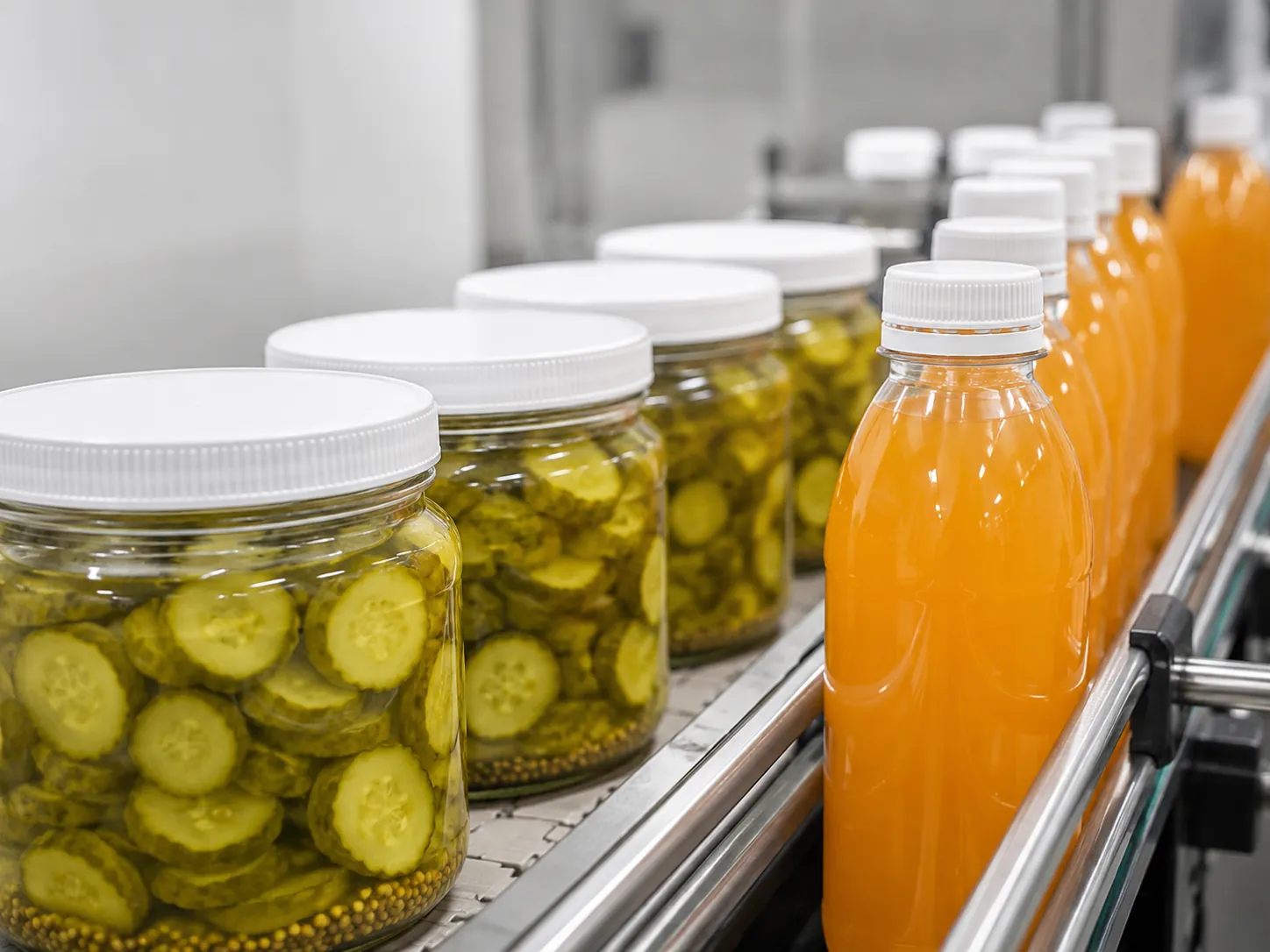
A useful capping machine proposal requires information about the closure, container, production target, line configuration, and formats the equipment must handle.
Cap and Container Specifications
Provide technical information for every intended cap-and-container combination:
- Closure details: Specify the closure type, material, diameter, height, liner, thread or lug design, and any required orientation.
- Container details: Provide the container material, shape, dimensions, neck finish, and filled weight. Include a neck-finish designation, such as 28-410, when available.
- Application requirements: For threaded closures, state the target application-torque range, measurement units, and test method recommended by the closure supplier.
- Special closures: Identify pumps, triggers, child-resistant caps, snap closures, plugs, or other components that may require orientation or dedicated tooling.
Technical drawings with dimensions and tolerances are helpful during initial machine configuration.
Production Targets and SKU Range
The supplier also needs to understand how the machine will be used:
- Required output: State the target sustained speed in bottles per minute or bottles per hour.
- SKU list: Identify every cap-and-container combination expected to run on the equipment.
- Automation level: Specify whether the project requires a manual, semi-automatic, standalone automatic, or fully integrated system.
- Changeover requirements: Explain how often formats will change and whether reduced changeover time or tool-less adjustments are required.
- Future formats: Include any additional containers or closures that the machine may need to accommodate later.
This information helps determine the appropriate feeding system, capping head, container handling, change parts, and control configuration.
Line Layout and Facility Information
For equipment that will be connected to an existing or planned production line, provide:
- Available space: Provide the usable length, width, ceiling height, and any nearby walls, columns, or access restrictions.
- Conveyor details: Specify the container travel direction and conveyor height and width.
- Line connections: Identify the required connection points with the filler, labeler, sealer, or inspection equipment.
- Utilities: State the available electrical supply, compressed air, and any other required utilities.
- Site requirements: Identify destination-market requirements that may affect guarding, electrical components, hygiene, or documentation.
A basic line drawing or facility layout can help the supplier evaluate machine dimensions and integration requirements.
Samples, Testing, and Acceptance Requirements
Physical samples should be provided when possible so the supplier can evaluate feeding, placement, tightening, and container stability. Prototypes may support early feasibility work, but final testing and acceptance should use production-grade caps, liners, and containers whenever available.
Buyers should also define the required acceptance criteria, which may include:
- Sustained production speed;
- Application- or removal-torque range;
- Cap presence, height, and alignment;
- Leak or vacuum-retention performance;
- Acceptable damage and rejection limits;
- Changeover time for specified formats;
- Required manuals, drawings, test records, and validation documents.
Providing this information allows suppliers to prepare a more accurate quotation and define a meaningful factory acceptance test before shipment.
Frequently Asked Questions
What are the different types of capping machines?
Common types include screw cappers for threaded closures, snap or press-on cappers for non-threaded closures, vacuum cappers for compatible glass jars and metal lug caps, ROPP cappers for roll-on aluminum closures, and crown cappers for beverage bottles. Screw cappers may use spindle wheels or chuck-style heads. Each type is available in different automation levels, depending on the closure, container, required output, and production setup.
How do I choose a capping machine?
Start with the closure type, container material and dimensions, required application torque or force, and target production speed. Then compare the required cap-feeding method, automation level, change parts, inspection options, and changeover time. Final selection should be confirmed using production-grade caps and containers under an agreed acceptance test.
What is a screw capping machine?
A screw capping machine applies and tightens threaded caps onto compatible bottles or jars using controlled rotational force. Common configurations include spindle cappers, which use rotating wheels to tighten caps as containers move along a conveyor, and chuck cappers, which grip each cap with a dedicated head. The appropriate configuration depends on the closure, container, torque requirements, output, and changeover needs.
When is vacuum capping used?
Vacuum capping is commonly used for sauces, jams, pickles, condiments, and other products packed in rigid glass containers with compatible metal lug or twist-off closures. The process helps establish or maintain reduced headspace pressure after closing. It must be used together with the appropriate formulation, sanitation, filling, thermal-processing, and storage controls rather than treated as a standalone preservation method.
Can one capping machine handle different caps?
A capping machine may handle multiple cap sizes within the same closure family by using adjustments, recipes, or change parts. For example, one screw capper may accommodate several threaded caps if its feeder, capping heads, and container-handling components are compatible. Switching between different closure principles, such as screw, ROPP, crown, and press-on caps, usually requires dedicated tooling or a machine designed for multiple closure types. All intended cap-and-container combinations should be confirmed before purchase.
Final Thoughts
The right capping machine depends on the closure type, container geometry, required application torque or force, target output, and the range of formats the line must handle. Comparing these requirements with documented machine capabilities helps reduce loose caps, container damage, difficult changeovers, and production bottlenecks.
Before selecting a configuration, test the intended cap-and-container combinations under representative production conditions. Send our team your production samples, technical drawings, output target, and acceptance requirements to receive a capping solution matched to your packaging line.

Continue Reading
Explore more insights from our packaging machinery experts
Semi-Automatic vs. Automatic Can Seaming Machines: What Is the Difference?
Compare semi-automatic vs. automatic can seamers by labor, output, changeovers, footprint, and line integration. Choose the right system—request a quote.
Read Article
Shrink Sleeve Labels vs. Pressure-Sensitive Labels: What Is the Difference?
Compare shrink sleeve vs. pressure-sensitive labels by coverage, design, equipment, durability, and changeovers. Choose the right labeling system for your line.
Read Article
How Much Does a Filling Machine Cost?
Learn what drives filling machine cost, from automation and output to materials, cleaning, and line scope. Compare quotations and request a tailored quote today.
Read ArticleReady to Upgrade Your Packaging Line?
Get in touch with our engineers for a free consultation and tailored equipment proposal within 24 hours.
Get a Free 3D CAD Line Layout Design
- Factory-Direct Pricing
- Fast Turnaround Time
- Top-Tier Global Components
- Dedicated After-Sales Support


