How Much Does a Filling Machine Cost?
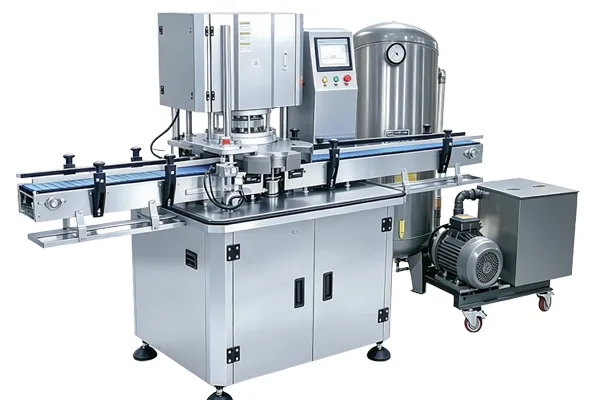
Filling machine cost depends on more than the equipment’s base price. Filling technology, automation level, output, container formats, change parts, and the scope of supply can all affect the total investment. If these requirements are not defined before requesting a quote, buyers may receive proposals that appear comparable but cover very different equipment and services.
This guide explains the main factors that influence filling machine prices, what a detailed quotation should include, and how to compare supplier proposals on the same basis. It will help you define a more realistic project budget before selecting a standalone filler or complete filling line.
Why Is There No Single Filling Machine Price?
Filling machine prices vary because the required equipment depends on the product, container, output, automation level, and scope of supply.
Some filling machines are available as standard models, while others require project-specific components or engineering. Even machines that appear similar may use different dosing systems, numbers of filling heads, control components, product-contact materials, and container-handling systems. A useful price comparison is therefore only possible after the application and quotation scope have been defined.
Automation Level and Production Speed
Manual and benchtop fillers rely heavily on operator handling and generally require fewer control and conveying components. Semi-automatic machines automate the dosing cycle but may still require an operator to load, position, and remove containers.
Fully automatic systems add conveyors, container sensors, indexing mechanisms, PLC controls, and multiple filling heads. Higher output may also require faster dosing components, synchronized container handling, and integration with downstream equipment. These additions increase the equipment cost, although the final configuration should be based on sustained production requirements rather than theoretical maximum speed alone.
Scope of Supply: Machine vs. Full Line
The scope behind the quoted price is just as important as the machine specification. A standalone filling machine normally covers only the dosing equipment and its standard controls. Depending on the proposal, conveyors, product tanks, pumps, change parts, or feeding systems may be included or quoted separately.
A complete filling line may also include bottle unscrambling, rinsing, capping, labeling, coding, inspection, and packing equipment. Total project cost can extend further to installation, commissioning, training, freight, spare parts, utility connections, and site preparation. Buyers should confirm these boundaries before comparing prices from different suppliers.
How Do Product Properties and Filling Methods Affect Cost?
Product characteristics determine the dosing system, product-contact materials, and optional controls required for reliable filling.
The lowest-priced machine is not necessarily suitable for every application. A supplier first needs to understand how the product flows, how it reacts during filling, and whether it presents sanitation or material-compatibility requirements. Buyers who have not yet determined the appropriate dosing method can review this guide on how to choose a filling machine for liquid, coller, powder, or granule products.
Key Product Properties That Affect Cost
- Viscosité: Free-flowing liquids may work with gravity or pump-based systems, while thicker products can require piston fillers, positive-displacement pumps, larger passages, or heated hoppers.
- Foaming and dripping: Products that foam, splash, string, or drip may require bottom-up filling, diving nozzles, shut-off valves, or more controlled filling cycles.
- Particles and solids: Particle size, shape, and concentration influence valve, nozzle, pump, piston, auger, or weighing-system selection. The product path must be large enough to prevent blockage or damage.
- Density and flow variation: Products with changing density or inconsistent flow may need weighing, agitation, level control, or additional calibration procedures.
- Corrosiveness: Product chemistry determines the appropriate contact materials, seals, hoses, pumps, and coatings. Material selection should be based on compatibility rather than assuming that 316L stainless steel is suitable for every corrosive product.
- Temperature sensitivity: Hot-fill, heated, cooled, or temperature-sensitive products may require jacketed tanks, insulated piping, temperature controls, or specialized seals.
How Filling Method Affects the Price
Different filling methods require different mechanical, electrical, and control components:
| Filling Method | Typical Applications | Main Cost Factors |
|---|---|---|
| Gravity and Time-Pressure | Suitable free-flowing liquids | Number of filling heads, nozzle design, product tank, pressure controls, and container-handling requirements |
| Piston and Positive-Displacement Pump | Viscous liquids, pastes, creams, sauces, and some products containing particles | Pistons, pumps, cylinders, valves, drives, product passages, and required dosing range |
| Auger and Volumetric Cup | Powders, granules, and other dry products | Product-specific augers or cups, agitation systems, tooling, dust control, and dosing controls |
| Net-Weigh and Load Cell | Applications in which the product is dosed according to weight | Load cells, weighing frames, feedback controls, calibration procedures, and environmental stability |
| Flow Meter | Suitable liquids measured by product flow | Meter type, product compatibility, flow range, control valves, and required measurement performance |
No filling method belongs to one universal price tier. The number of heads, dosing range, automation level, hygiene requirements, and supporting equipment may have as much influence on the quotation as the filling principle itself.
Get a Project-Specific Filling Machine Quote
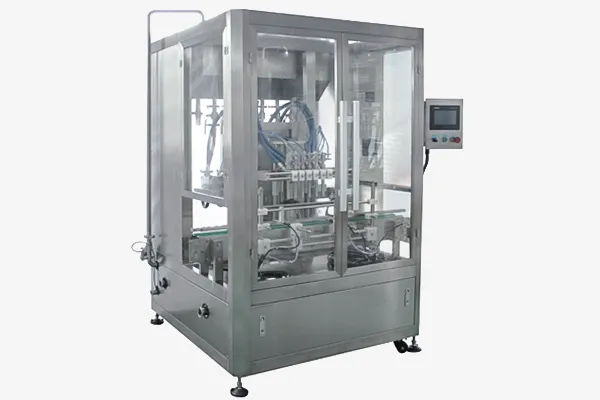
How Do Fill Range, Accuracy, and Output Affect the Price?
Fill range, accuracy requirements, and target output influence the dosing components, number of filling heads, controls, and container-handling systems included in a filling machine quotation.
How Fill Range Affects Machine Configuration
A wider fill range may require larger or interchangeable dosing components, additional recipes, and more adjustment capability. For example, piston size, pump capacity, nozzle diameter, auger tooling, or weighing range must be suitable for the required dose and product.
One machine may not perform equally well across widely separated fill volumes. In some applications, buyers may need multiple dosing sets or separate machines to maintain acceptable speed and accuracy. These additional components and changeover requirements increase the project cost.
A dedicated machine with a narrower fill range can be simpler to configure, but it offers less flexibility for future products. Buyers should therefore define both current and planned fill volumes before requesting a quotation.
How Accuracy Requirements Affect Cost
A tighter accuracy requirement may require more precise dosing components, feedback controls, calibration procedures, and production testing. The appropriate solution could involve servo-controlled pistons, load-cell weighing, flow meters, or other dosing technologies, depending on the product and fill quantity.
Accuracy should not be compared as a percentage alone. Suppliers should define:
- How accuracy is calculated.
- The target fill quantity and permitted tolerance.
- The product and container used for testing.
- The production speed during the test.
- The number of samples and test duration.
More demanding acceptance criteria can increase both equipment and validation costs. However, the most expensive filling method is not automatically the most accurate for every product. The dosing system must be evaluated under the intended production conditions, including the product, container, speed, and measurement method. Our guide to filling machine accuracy issues explains how product variation, calibration, component wear, and container handling can affect production results.
How Output Affects Equipment Cost
Higher output generally requires more filling heads, faster dosing components, and automated container handling. As the number of heads increases, the machine may need additional pumps, valves, nozzles, drives, sensors, and control channels.
Production speed can also affect conveyor design, container spacing, infeed control, and synchronization with capping, labeling, or other downstream equipment. Optional inspection systems may add further cost when they are included in the required line scope.
Buyers should distinguish between the filler’s maximum cycle rate and the guaranteed sustained output for correctly filled containers. A quotation should state the product, container, fill volume, and operating conditions used to define the promised production rate.
How Do Containers and Changeovers Affect Machine Cost?
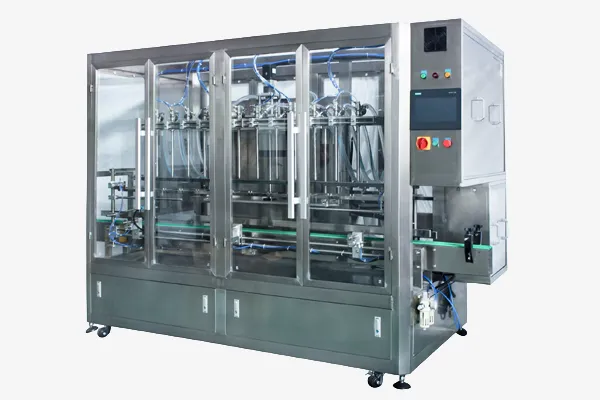
Handling multiple container formats can increase equipment cost through additional adjustment mechanisms, format parts, controls, and changeover requirements.
Changeover Time as an Operating Cost
A changeover begins when production of one format stops and ends when the next format is producing acceptable containers at the required conditions. The time involved depends on the number of adjustments, parts that must be replaced, cleaning requirements, and the level of operator involvement.
Common changeover tasks include:
- Adjusting conveyor rails and container guides.
- Changing filling nozzles or dosing components.
- Resetting fill volumes and machine recipes.
- Replacing star wheels, timing screws, or neck-handling parts where used.
- Cleaning product-contact components between products.
- Running test containers and confirming acceptable fill results.
Longer or more frequent changeovers increase downtime and labor requirements. Buyers should therefore evaluate changeover procedures and expected format frequency rather than comparing machine purchase prices alone.
Tooling and Format Parts
Container diameter, height, opening size, shape, stability, and material can affect the required handling components. A flexible machine may use adjustable guides and recipe-controlled settings, while other designs require dedicated format parts for each container.
A quotation should identify:
- Which container formats are included in the base configuration.
- Which adjustments can be completed without replacing parts.
- What additional format parts are required.
- The expected changeover procedure and operator skill level.
- Whether future containers can be added without major machine modifications.
Tool-free adjustments and quick-change components may increase the initial equipment cost but can reduce setup time and the risk of incorrect installation. Standardizing container families can also reduce the number of format-specific parts required.
Which Materials, Cleaning, and Safety Requirements Add Cost?
Product-contact materials, hygienic design, cleaning methods, safety systems, and target-market requirements can all change a filling machine’s specification and price.
These requirements should be defined for the actual product and production environment. A more expensive material or control system is not automatically better if it does not address a documented application need.
Material Selection and Construction
Product-contact materials must be compatible with the product, cleaning chemicals, temperature, and expected contact time. Depending on the application, the specified materials may include 304 or 316L stainless steel, polymers, coatings, or other corrosion-resistant materials.
Cost can increase when a project requires:
- 316L or other upgraded materials across tanks, pipes, valves, pumps, and nozzles.
- Full stainless steel construction for the frame, guards, or electrical enclosures.
- A specified surface finish for product-contact areas.
- Crevice-resistant welds, polished surfaces, or drainable piping.
- Product-compatible seals and hoses made from materials such as EPDM, PTFE, silicone, or other specified polymers.
316L stainless steel should not be treated as universally suitable for every salty, acidic, or aggressive product. Material selection should be confirmed through compatibility data or testing.
Cleaning Systems and Hygienic Design
Cleaning requirements affect both the machine structure and the product-contact system. For filling equipment used in food production, 21 CFR §117.40 on equipment and utensils requires equipment to be adequately cleanable and food-contact surfaces to be corrosion-resistant, nontoxic, and capable of withstanding the intended product and cleaning procedures. Meeting the applicable hygiene requirements may therefore affect material selection, surface finishing, piping design, component accessibility, and the final equipment cost.
CIP may be specified where frequent or validated automated cleaning is required, but it is not mandatory for every food, dairy, cosmetic, or pharmaceutical filling application. SIP and aseptic configurations require a system specifically designed for sterilization conditions; they cannot be treated as simple optional upgrades to any standard filler.
Buyers should define:
- The products and allergens handled on the line.
- The required cleaning frequency and changeover procedure.
- Whether product-contact parts are removed or cleaned in place.
- The cleaning chemicals, temperatures, pressures, and cycle records required.
- Any hygienic-design or validation requirements applicable to the facility.
Safety and Target-Market Requirements
Safety requirements can add guarding, interlocks, emergency-stop circuits, safety relays or controllers, protected access points, and upgraded electrical components. The required design depends on the machine, operating environment, and destination market.
Additional costs may arise from:
- Interlocked guards, light curtains, or perimeter protection.
- Washdown-resistant enclosures, connectors, sensors, and controls.
- Electrical components selected for local voltage and applicable standards.
- Risk assessment, technical files, declarations, manuals, and test records.
- FAT, installation documentation, or qualification support when included in the project.
CE marking, FDA requirements, ISO standards, and GMP expectations should not be presented as interchangeable machine certifications. The supplier and buyer should identify the specific safety, electrical, hygienic, material, and documentation requirements that apply to the intended market and production process.
What Is Usually Included in a Filling Machine Quotation?
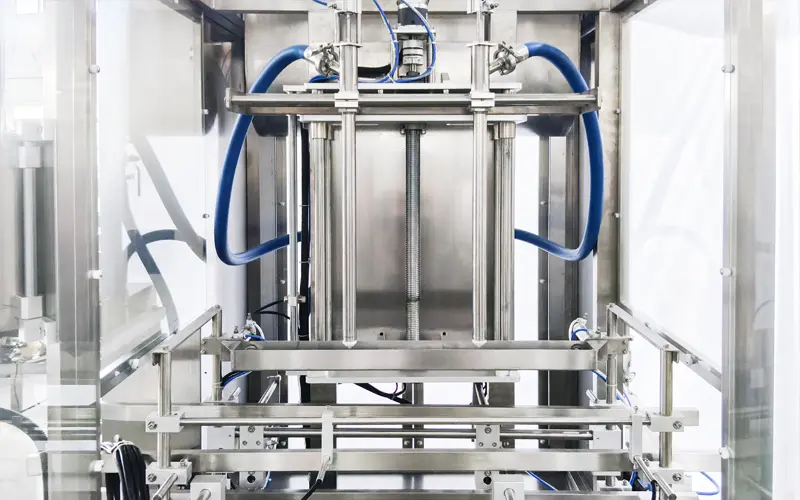
A useful filling machine quotation defines the technical configuration, application limits, commercial terms, included services, and exclusions.
A quotation is not just a total price, but it is not automatically a final contract either. It provides the basis for technical and commercial review before an order is confirmed. Buyers should check that the quoted configuration matches the agreed product, container, output, and scope requirements.
Technical Specifications and Scope of Supply
The quotation should identify the equipment being offered and the conditions under which its stated performance applies. Key information includes:
| Quotation Item | Details to Confirm |
|---|---|
| Machine and Model | Specifies the exact model, filling principle, and automation level—manual, semi-automatic, or fully automatic. |
| Filling Heads and Nozzles | Details the number of filling heads, nozzle design, and whether features such as anti-drip or bottom-up filling are included. |
| Capacity and Accuracy | States the expected output and filling accuracy, together with the applicable test conditions. |
| Scope of Supply | Clarifies whether the quotation covers a standalone filler or an integrated line and lists included modules such as conveyors, cappers, labelers, or accumulation tables. |
Performance figures should not be accepted without defined test conditions. A quoted maximum cycle rate may not represent sustained production output with the buyer’s actual product and container.
Product and Container Parameters
The quotation should record the application information used to configure the machine:
| Quotation Item | Details to Confirm |
|---|---|
| Product Definition | Outlines the product the machine is designed to handle, including viscosity, temperature, foaming properties, and particles or solids. |
| Container Specifications | Specifies the container type, material, size range, and critical dimensions such as the neck or opening diameter. |
| Contact Part Materials | Lists the materials used for all product-contact parts to confirm compatibility and applicable hygiene requirements. |
| Change Parts | Defines the included tooling or changeover parts required for the container sizes and product types specified in the scope. |
These details help prevent a standard configuration from being quoted for an application that requires different dosing, handling, or material specifications.
Commercial and Delivery Terms
Commercial terms should clearly explain how the total price and delivery responsibilities are defined:
| Quotation Item | Details to Confirm |
|---|---|
| Price and Currency | States the unit price, total price, currency, and any applicable taxes. |
| Payment Terms | Details the deposit, production-stage payments, and final balance requirements. |
| Lead Time | States the estimated time from order confirmation until the machine is ready for shipment. |
| Shipping Terms | Identifies the agreed Incoterms rule and named location to define transport, insurance, customs, and delivery responsibilities. |
| Quotation Validity | States the date until which the quoted price and commercial terms remain valid. |
Terms such as EXW, FOB, and CIF allocate costs and responsibilities differently. The named location must be stated because the Incoterms rule alone does not fully define the delivery point.
Soutien, Documentation, and Exclusions
The quotation should distinguish included support from separately charged services. Items to confirm include:
| Quotation Item | Details to Confirm |
|---|---|
| Support Services | Specifies whether installation, commissioning, and operator training are included or quoted separately. |
| Warranty | Outlines the warranty period, start date, coverage, and applicable limitations. |
| Documentation | Lists the supplied manuals, electrical schematics, pneumatic diagrams, drawings, and recommended spare-parts information. |
| Exclusions | Identifies excluded items such as freight, import duties, local taxes, site preparation, utility connections, and tooling not explicitly included in the scope. |
Any item that affects installation, acceptance, or normal operation should be identified as included, optional, buyer-supplied, or excluded before the order is placed.
How Should Buyers Compare Filling Machine Quotations?
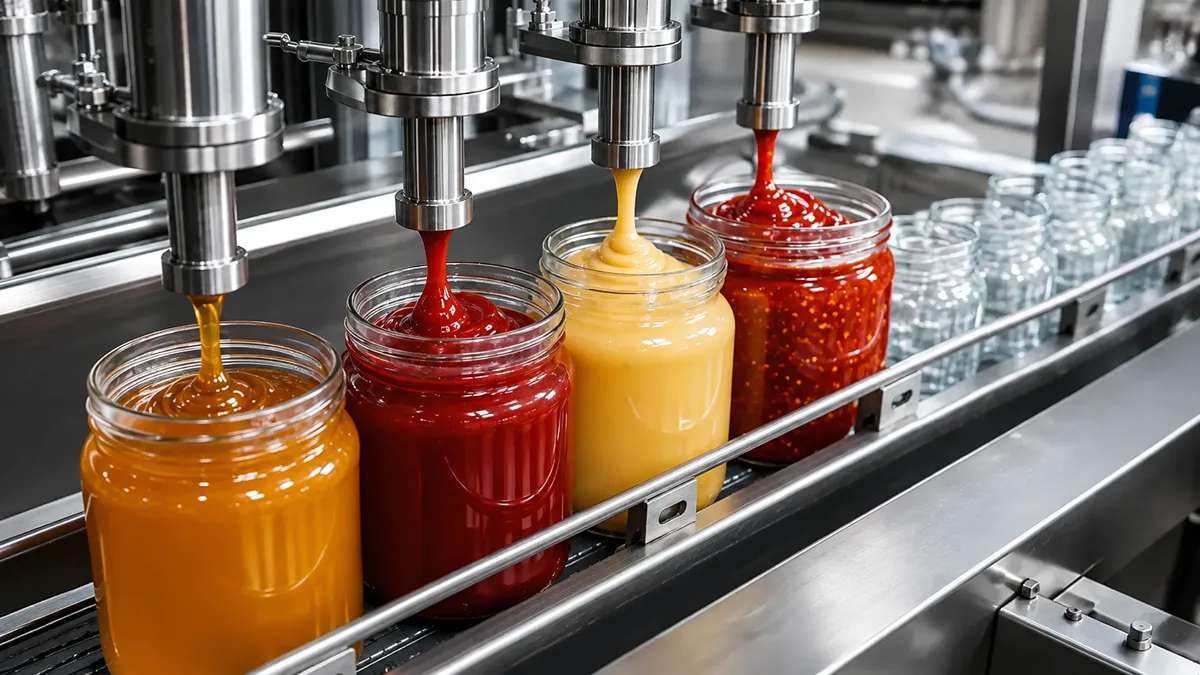
Compare filling machine quotations only after aligning the application, technical scope, performance conditions, commercial terms, and support responsibilities.
Two quotations can show different prices because they cover different equipment, test conditions, services, or delivery responsibilities. A lower quotation is not necessarily incomplete, and a higher price does not automatically indicate a better machine. Buyers should issue the same project requirements to each supplier and document any differences before comparing the totals.
| Comparison Point | What to Verify |
|---|---|
| Application Basis | Confirm that each supplier is quoting for the same product properties, fill volumes, containers, target output, and accuracy requirements. |
| Technical Scope | Compare the filling principle, automation level, number of heads, dosing components, product-contact materials, container handling, change parts, and included line equipment. |
| Performance Conditions | Check how output and accuracy are defined, including the product, container, fill quantity, test duration, sample size, and sustained operating speed. |
| Testing and Acceptance | Confirm whether testing with production samples, FAT procedures, acceptance criteria, and test reports are included. Compare qualification documents such as IQ/OQ only when required for the project. |
| Inclusions and Exclusions | Identify whether conveyors, tanks, pumps, freight, installation, commissioning, training, spare parts, and site work are included, optional, or buyer-supplied. |
| Commercial Terms | Compare payment schedules, lead times, quotation validity, Incoterms, packing, warranty start dates, and responsibility for taxes, duties, and insurance. |
| Support and Lifecycle Cost | Review warranty coverage, remote-support arrangements, spare-parts availability, maintenance requirements, energy use, labor needs, and expected changeover time. |
Frequently Asked Questions
How much does a filling machine cost?
Filling machine cost varies according to the product, dosing method, fill range, number of filling heads, target output, container formats, materials, and automation level. A manual or benchtop filler generally costs less than a semi-automatic machine, while an automatic filler or complete filling line requires a larger investment. An accurate price can only be provided after the product, container, performance requirements, and scope of supply have been defined.
Why do filling machine prices vary so much?
Filling machine prices vary because each application may require a different dosing method, fill range, number of heads, automation level, container-handling system, and product-contact material. Cost also depends on whether the quotation covers a standalone filler or a complete line with conveyors, capping, labeling, inspection, testing, documentation, and support. Quotes should therefore be compared only after the application and scope of supply have been aligned.
How do I compare filling machine prices?
Compare quotations using the same product, container, fill range, target output, accuracy criteria, automation level, and test conditions. Check which conveyors, tanks, pumps, change parts, testing, documentation, installation, training, and spare parts are included or excluded. Also review warranty coverage, maintenance, labor, energy use, and expected changeover time rather than comparing the initial equipment prices alone.
What is typically included in a filling machine quotation?
A filling machine quotation should identify the machine model, dosing method, fill range, number of heads, product-contact materials, automation level, expected output, and applicable test conditions. It should also define the included equipment and change parts, documentation, warranty, payment terms, lead time, Incoterms, support services, optional items, and exclusions.
Are shipping and installation included in the price?
Shipping and installation are included only when they are explicitly listed in the quotation. Transport responsibilities depend on the agreed Incoterms rule and named location, while installation, commissioning, travel, accommodation, training, duties, taxes, and site preparation may be quoted separately. Buyers should confirm each item before comparing the total project cost.
Final Thoughts
Filling machine cost depends on the application and the scope behind the quotation. Product properties, fill range, container formats, target output, materials, automation, testing, and support responsibilities can all change the final project price. A meaningful comparison therefore requires suppliers to quote against the same requirements and clearly identify included, optional, and excluded items.
Define your product, container, fill volume, target output, accuracy criteria, and required line scope before requesting a price. Contact our engineering team to review your requirements and prepare a filling machine quotation tailored to your production needs.

Continue Reading
Explore more insights from our packaging machinery experts
Semi-Automatic vs. Automatic Can Seaming Machines: What Is the Difference?
Compare semi-automatic vs. automatic can seamers by labor, output, changeovers, footprint, and line integration. Choose the right system—request a quote.
Read Article
Types of Capping Machines and How to Choose the Right One
Compare the main types of capping machines, including screw, snap, vide, ROPP, and crown cappers. Match your closure and output—request a solution.
Read Article
Shrink Sleeve Labels vs. Pressure-Sensitive Labels: What Is the Difference?
Compare shrink sleeve vs. pressure-sensitive labels by coverage, design, equipment, durability, and changeovers. Choose the right labeling system for your line.
Read ArticleReady to Upgrade Your Packaging Line?
Get in touch with our engineers for a free consultation and tailored equipment proposal within 24 heures.
Obtenez une conception de disposition de ligne CAO 3D gratuite
- Prix directs en usine
- Délai d'exécution rapide
- Composants mondiaux de premier plan
- Support après-vente dédié


