How to Choose a Filling Machine for Liquid, Paste, Powder, or Granule Products
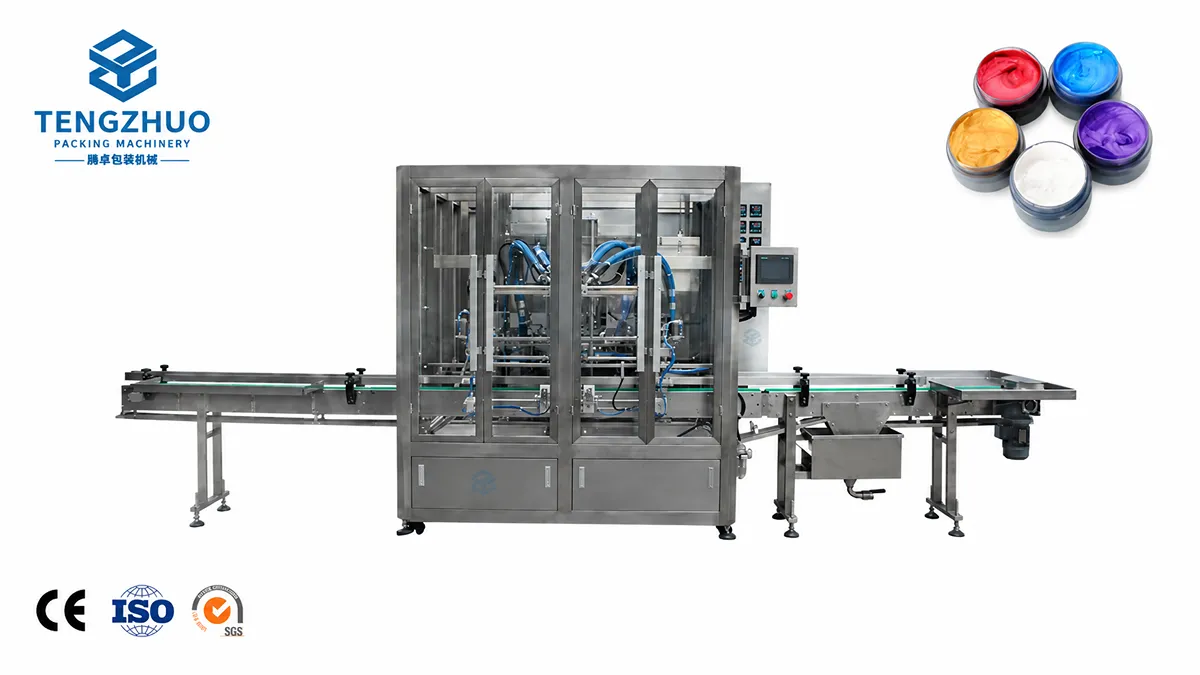
Selecting a filling machine starts with understanding your product, container, and production requirements. The wrong filling technology can cause inaccurate fills, product waste, and unnecessary downtime.
This guide covers the key factors manufacturers should evaluate before choosing a filling machine, including product properties, filling technology, production speed, and supplier requirements. 滕卓 provides customized filling solutions to help businesses improve filling accuracy and production efficiency.
Identify Your Product Type Before Choosing a Filling Machine
Before selecting a filling machine, first evaluate your product characteristics. These factors determine the suitable filling technology and prevent issues such as inaccurate dosing, downtime, and product waste.
| Selection Factor | What to Check | Why It Matters |
|---|---|---|
| Product Type | Liquid, paste, powder, or granule | Different product states require different filling technologies and dosing systems. |
| Viscosity | Viscosity level (cP) at filling temperature | Determines whether the machine needs gravity, pump, piston, or other filling methods. |
| Flow Behavior | Foaming, stringing, splashing, or poor flow characteristics | Affects nozzle design, filling method, and accuracy control. |
| Particulates | Particle size, hardness, and solids percentage | Helps prevent clogging, product damage, and inconsistent filling. |
| Chemical Properties | Corrosiveness, acidity, and material compatibility | Determines suitable contact materials such as stainless steel or specialized plastics. |
| Filling Temperature | Hot-fill or cold-fill process | Impacts viscosity, pump selection, and component durability. |
| Hygiene Requirements | CIP/SIP needs, shelf life, and contamination risk | Determines cleaning design and suitability for food, beverage, or pharmaceutical applications. |
Match the Filling Machine Type to Your Product
Selecting the right filling equipment isn’t about features. It’s about matching the machine’s physics to your product’s physical state. Manufacturers should first understand different liquid, powder, paste, and granule filling solutions before selecting the right equipment.
| Feature | 液体充填機 | Paste & Viscous Fillers | Powder Dosing Systems | Granule Weighing Systems |
|---|---|---|---|---|
| Typical Products | Water, oils, juices, thin sauces | Ketchup, peanut butter, creams, gels | Flour, spices, protein powder | Coffee beans, rice, nuts, seeds |
| Core Technology | Gravity, overflow, piston, pump fillers | Piston fillers, positive displacement pumps | Auger fillers (volumetric or gravimetric) | Multihead weighers, volumetric cup fillers |
| Key Selection Factor | Viscosity, foaming, fill accuracy (level vs. weight) | High viscosity, particulates, need for heat | Flow characteristics, bulk density, dust control | Particle integrity, size, weight precision |
| Common Industries | 飲料, cosmetic, chemical | 食べ物, cosmetic, pharmaceutical | 食べ物, pharmaceutical, chemical | Snack food, agriculture, industrial goods |
Need Help Choosing the Right Filling Machine?
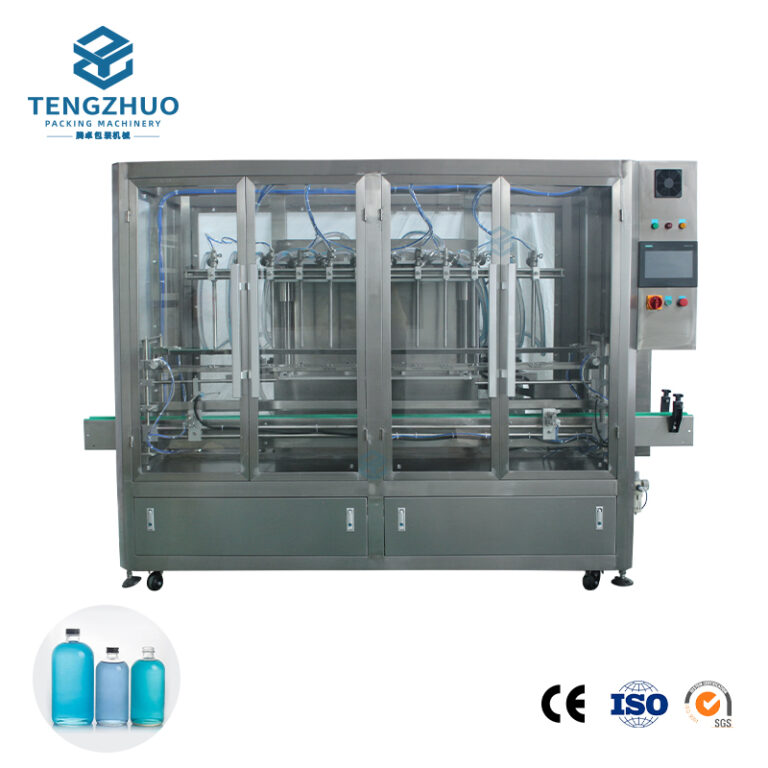
Match the Machine to the Container and Fill Requirements
The right filling machine depends not only on the product, but also on the container format, fill volume, and accuracy requirements. Incorrect matching can lead to unstable operation, inconsistent fills, and unnecessary product waste.
Define Container Requirements
Container design directly affects machine configuration and handling systems. Before selecting a filler, confirm:
- Material and Stability: PET bottles, glass containers, and pouches require different handling methods. Lightweight or unstable containers may need guides, supports, or specialized conveyors.
- Shape and Dimensions: Bottle height, diameter, and shape determine nozzle positioning and container handling accuracy.
- Neck Opening and Closure: The container opening and cap type affect nozzle design, fill level control, and downstream capping performance.
Specify Fill Volume and Accuracy
Define the required fill range and accuracy for each product-container combination.
- Fill Range: Identify the minimum and maximum fill volumes to ensure the machine’s dosing system can handle your products efficiently.
- Accuracy Requirements: Higher-value or regulated products may require more precise filling technologies, such as servo-driven or weight-based systems.
- Product Appearance: For transparent containers, consistent fill levels may be important. For regulated products, exact volume or weight control is usually the priority.
Select the Right Filling Technology
The best filling method depends on product characteristics, container requirements, and production goals.
- Overflow or Gravity Fillers: Suitable for low-viscosity liquids that require consistent fill levels, such as water, beverages, and cleaners.
- Piston Fillers: Ideal for thick products such as sauces, creams, and gels that require accurate volumetric dosing.
- Servo Pump or Flow Meter Fillers: Provide flexibility for different viscosities, volumes, and multiple SKUs.
- Net-Weight Fillers: Best for applications where precise product weight control is required, especially for high-value or regulated products.
Evaluate Filling Speed and Automation Requirements
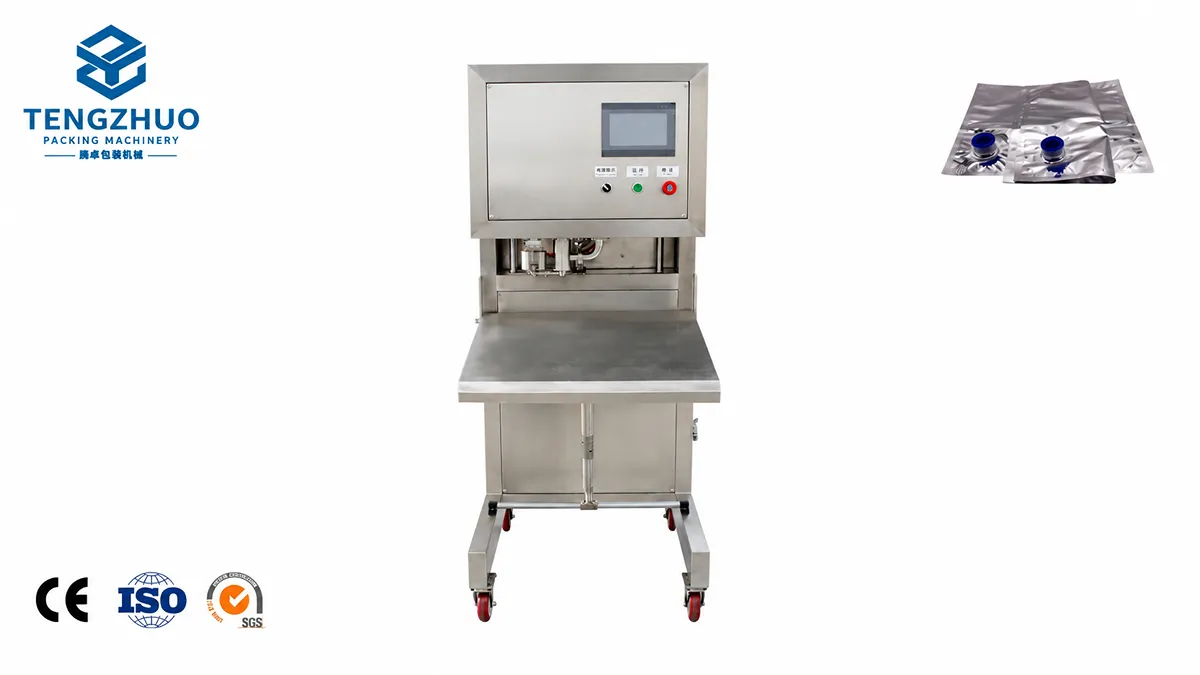
An industrial filling machine should be selected based on your actual production needs, not only the maximum speed listed by the manufacturer. Consider output targets, automation level, quality requirements, and line compatibility before making a decision.
Match Machine Speed to Real Production Needs
Rated speed represents the machine’s maximum capacity under ideal conditions. Actual output is affected by factors such as cleaning, changeovers, adjustments, and downtime.
Define your required production volume based on actual saleable output, then select a machine with enough capacity to meet both current demand and future growth.
Choose the Right Automation Level
The appropriate automation level depends on production volume, labor availability, and operational goals.
- Semi-automatic fillers: Suitable for smaller production runs, flexible operations, or businesses that need lower initial investment.
- Automatic filling systems: Better for higher-volume production, consistent quality control, and reduced labor requirements.
For products where accuracy and waste reduction are critical, automated systems with precise control functions can improve consistency and efficiency. However, buyers should evaluate output, labor savings, line compatibility, and payback before deciding when to upgrade to an automatic filling machine.
Set Key Performance Requirements
Before purchasing, define measurable performance targets, including:
- Fill Accuracy: Determines product giveaway and quality consistency.
- Reject Rate: Helps control production losses caused by inaccurate filling or handling issues.
- Changeover Time: Important for manufacturers running multiple products or container sizes.
- Operational Flexibility: Features such as recipe management and easy changeover systems can improve efficiency.
Ensure Proper Line Integration
A filling machine must work together with other packaging equipment, including conveyors, capping machines, labeling systems, and case packing equipment.
Confirm the machine’s control system, footprint, and utility requirements to ensure smooth installation and reliable operation within your existing production line.
Compare Accuracy, Cleaning, and Changeover Needs
After selecting the right filling technology, manufacturers should evaluate accuracy, cleaning requirements, and changeover efficiency. These factors directly affect product quality, operating costs, and long-term production performance. Understanding common filling machine accuracy issues can help manufacturers identify potential causes of inconsistent fills and reduce production losses.
Fill Accuracy Requirements
| Requirement | What to Consider | Recommended Solution |
|---|---|---|
| Product Value | High-value products require tighter control to minimize product giveaway and waste. | Net-weight or servo-controlled filling systems for higher precision. |
| Industry Requirements | 食べ物, beverage, cosmetic, and pharmaceutical products may require different accuracy standards. | Select filling technology based on regulatory and quality requirements. |
| Filling Technology | Different filling methods provide different levels of accuracy and flexibility. | Piston, pump, flow meter, or weight-based fillers depending on the application. |
Cleaning and Changeover Considerations
| Factor | What to Evaluate | Recommended Features |
|---|---|---|
| Cleaning Requirements | Consider product type, contamination risk, and cleaning frequency. | CIP/SIP systems, easy disassembly, and hygienic machine design. |
| Contact Materials | Ensure materials are compatible with the product and cleaning chemicals. | 316L stainless steel contact parts and corrosion-resistant components. |
| Machine Complexity | Complex systems may require more cleaning time and maintenance effort. | Simple designs with fewer product contact points and easy access. |
| Changeover Needs | Multiple products or container sizes require faster adjustments. | Tool-free change parts and recipe-based controls to reduce downtime. |
Evaluate Safety, Contact Materials, and Factory Conditions
A filling machine should match your product safety requirements, factory utilities, and installation conditions to ensure reliable operation and easy maintenance.
Check Product Contact Materials and Hygienic Design
Product-contact materials and machine design directly affect product safety, cleaning efficiency, and long-term reliability, especially in food, beverage, and pharmaceutical applications.
- Contact Materials: Verify that product-contact parts use suitable materials, such as 316L stainless steel, to ensure corrosion resistance and compatibility with the product and cleaning chemicals.
- Material Certification: Request material certificates and compliance documents to confirm that components meet required safety standards.
- Hygienic Design: Choose machines with smooth surfaces, minimal product-retention areas, easy disassembly, and CIP/SIP compatibility where required.
- Industry Certifications: For sensitive applications, consider equipment designed according to hygienic standards such as EHEDG Hygienic Design Principles or 3-A Sanitary Standards to support hygiene compliance.
Confirm Factory Conditions and Utility Requirements
Before installation, make sure your facility can support the machine’s power, space, and operating requirements.
- Power Supply: Confirm voltage, frequency, and power consumption requirements to ensure compatibility with your facility.
- Installation Space: Check machine dimensions, operator access, maintenance space, and material flow paths before purchase.
- Utilities: Verify requirements for compressed air, water, steam, or other connections needed for operation and cleaning.
Prepare Product Samples and Project Data for the Supplier
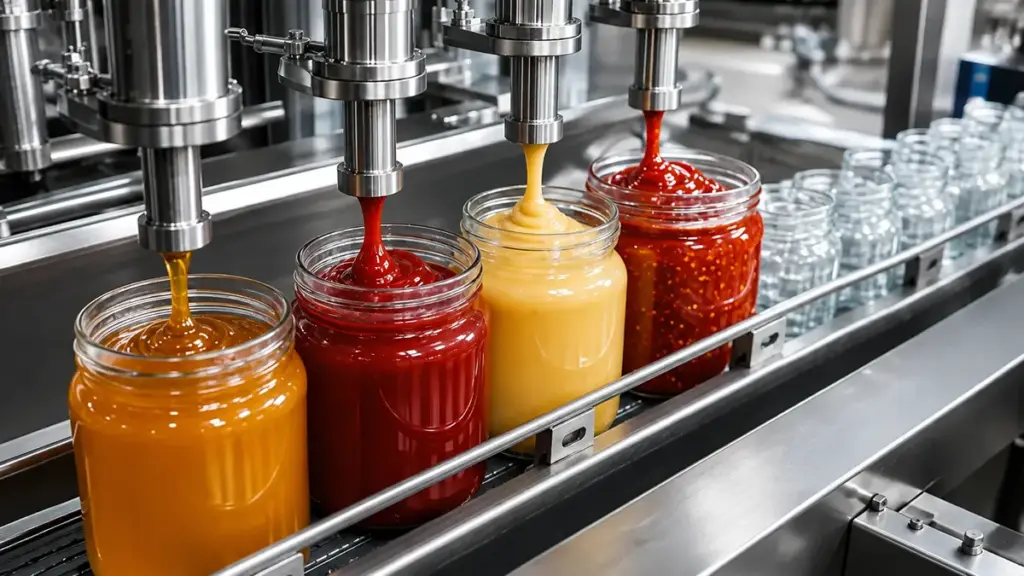
Before requesting a quotation, prepare complete product, container, and production information. Accurate data helps suppliers select the right filling technology and avoid incorrect machine recommendations.
Information Suppliers Need for Machine Selection
| Information Category | Key Details to Provide | Why It Matters |
|---|---|---|
| Product Characteristics | Viscosity, density, filling temperature, particle size, solids content, foaming tendency, pH, and chemical properties. | Determines the suitable filling technology, pump type, nozzle design, and contact materials. |
| Container Specifications | Bottle, jar, or pouch samples; material, dimensions, neck size, weight, closure type, and stability information. | Ensures proper container handling, nozzle positioning, and stable filling operation. |
| Production Requirements | Target output (CPM or units/hour), fill volume range, accuracy requirements, and quality standards. | Helps determine machine speed, automation level, and filling method. |
| Line Integration | Existing equipment layout, upstream and downstream machines, utilities, and installation space. | Ensures the filling machine fits your production line and factory conditions. |
Prepare Product Samples and Technical Documents
Before final machine selection, provide product samples and technical information to help suppliers verify filling performance and recommend the right machine configuration.
- Product Samples: Provide samples for testing viscosity, flow behavior, particle handling, and filling performance.
- Container Samples: Send actual bottles, jars, or pouches with matching closures to verify container handling, nozzle positioning, and filling stability.
- Technical Specifications: Include container dimensions, material, neck finish, product properties, and any special handling requirements.
Define Production and Installation Requirements
Machine configuration depends on your production goals and factory conditions. Providing clear requirements helps suppliers select the correct machine speed, automation level, and system configuration.
- Production Targets: Specify required output in containers per minute (CPM) or units per hour, along with fill volume range and accuracy requirements.
- Quality Requirements: Define standards such as fill tolerance, cosmetic fill level, no-drip performance, or industry-specific compliance requirements.
- Line Integration: Provide information about existing equipment, including conveyors, cappers, labelers, and other upstream or downstream systems.
- Factory Conditions: Confirm available utilities, including power supply, compressed air, water, steam, and installation space.
よくある質問
How do I choose a filling machine?
To choose a filling machine, define the product, package, output, filling principle, and operating economics in a structured sequence, then compare specific machines that match these parameters.
Which filling machine is suitable for liquids?
A liquid filling machine is suitable when the filler type matches the liquid’s viscosity, foaming tendency, container type, and required fill accuracy. For most applications, the best choice is gravity, overflow, piston, pump, or vacuum filling, depending on whether the liquid is thin, foamy, viscous, or level-sensitive.
What is the difference between powder and granule filling machines?
The core difference is product behavior: powder filling machines are built for fine, cohesive, dust-prone materials, while granule filling machines are built for larger, free-flowing particles that are easier to measure by volume or weight.
How should fill range and output be specified when choosing a filling machine?
Fill range and output should be defined based on product properties, container size, accuracy requirements, and production needs. Specify the minimum and maximum fill volume or weight, along with the required containers per minute or hour, to ensure the right machine type and configuration.
How accurate does a filling machine need to be?
A filling machine should provide accuracy that meets product requirements, regulatory standards, and cost targets. Required accuracy depends on the filling technology, product value, and industry requirements. High-value or regulated products usually require tighter control than standard liquid applications.
When is an automatic filling machine necessary?
An automatic filling machine becomes necessary when production volume, labor constraints, quality requirements, and growth plans exceed what manual or semi‑automatic systems can handle efficiently, consistently, or economically.
Final Thoughts
Choosing the right filling machine requires a clear understanding of your product, container, production requirements, and long-term operating goals. Evaluating these factors before purchase helps avoid incorrect equipment selection, unnecessary downtime, and production losses.
Before requesting a quotation, prepare your product samples, container specifications, and target output requirements. Contact Tengzhuo’s engineers today for a customized filling solution and get professional recommendations based on your application needs.

Continue Reading
Explore more insights from our packaging machinery experts
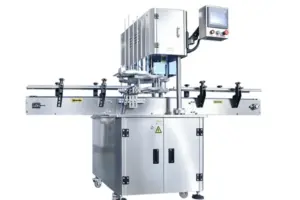
Semi-Automatic vs. Automatic Can Seaming Machines: What Is the Difference?
Compare semi-automatic vs. automatic can seamers by labor, output, changeovers, footprint, and line integration. Choose the right system—request a quote.
Read Article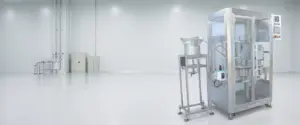
Types of Capping Machines and How to Choose the Right One
Compare the main types of capping machines, including screw, snap, vacuum, ROPP, and crown cappers. Match your closure and output—request a solution.
Read Article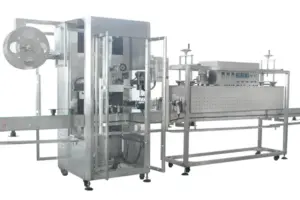
Shrink Sleeve Labels vs. Pressure-Sensitive Labels: What Is the Difference?
Compare shrink sleeve vs. pressure-sensitive labels by coverage, design, equipment, durability, and changeovers. Choose the right labeling system for your line.
Read ArticleReady to Upgrade Your Packaging Line?
Get in touch with our engineers for a free consultation and tailored equipment proposal within 24 時間.
無料の 3D CAD ライン レイアウト デザインを入手
- 工場直販価格
- 迅速な所要時間
- 最上位のグローバルコンポーネント
- 専用のアフターサポート


