충전물 기계는 무엇입니까? 유형, 작업 과정, 및 응용
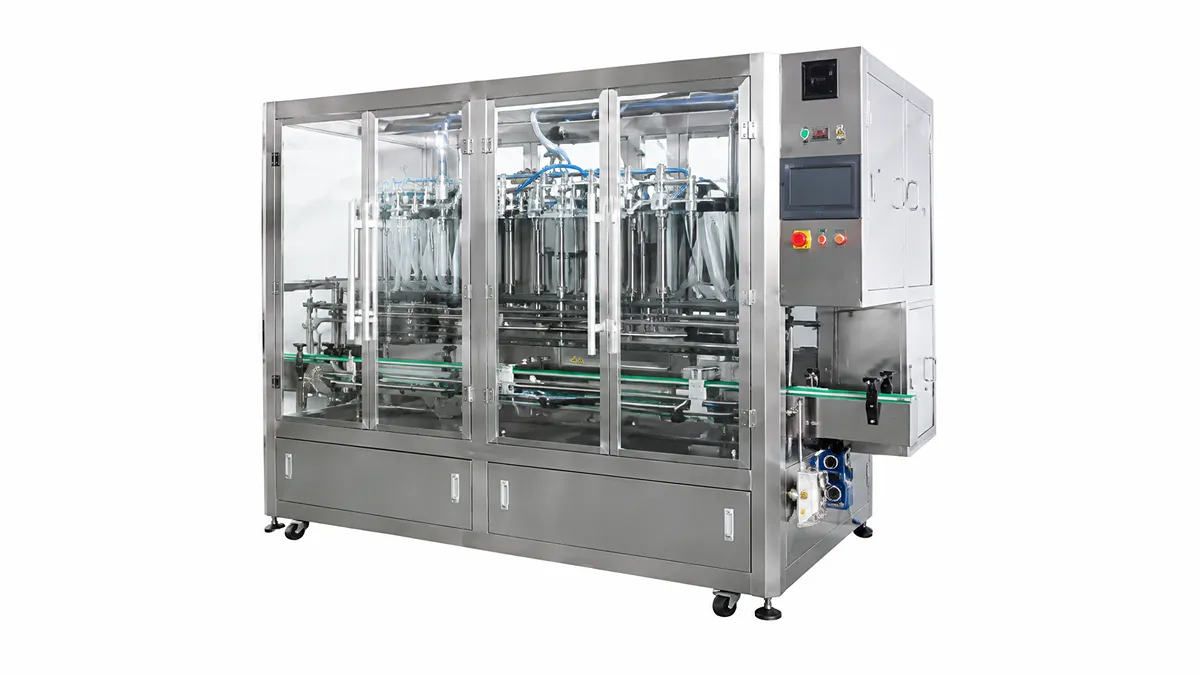
Filling machines help manufacturers package liquids, 페이스트, 분말, and granules with consistent accuracy and speed. By automating the dosing process, these machines reduce product waste, improve production efficiency, and maintain reliable packaging quality.
In this guide, Tengzhuo explains how filling machines work, the major machine types available, and how different filling technologies match specific products, containers, 및 생산 요구 사항.
충전물 기계는 무엇입니까?
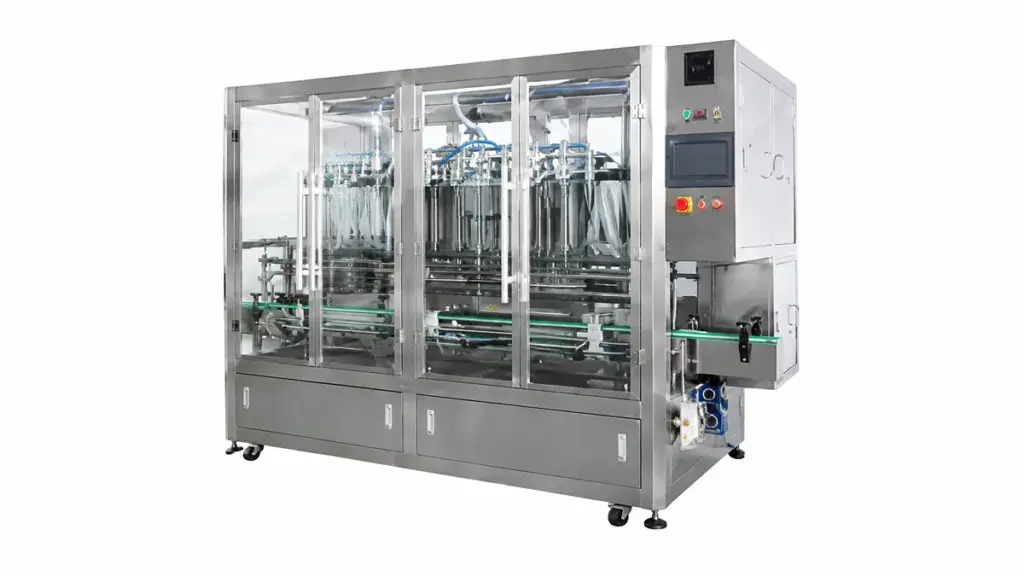
A filling machine is industrial equipment that dispenses a precise amount of product into containers. It is the core of modern packaging lines, ensuring accuracy and speed.
Core Definition and Role in Packaging
A filling machine is industrial equipment designed to dispense a precise, measured quantity of product into containers such as bottles, pouches, or jars. As a central component of modern packaging lines, it is responsible for ensuring accuracy, 속도, and hygienic product handling. Filling machines are widely used in industries such as food and beverage, cosmetics, chemicals, and pharmaceuticals, where accurate dosing and consistent packaging are required.
The General Filling Process
The automated filling process generally follows a clear sequence:
- First, bulk product is fed into a supply hopper or tank.
- Empty containers are then transported by a conveyor system and positioned directly under the filling nozzles.
- The machine’s dosing mechanism dispenses a preset volume or weight of the product into each container.
- Finally, the filled containers move on for downstream processes like capping, sealing, and labeling.
Key Components and Their Functions
Several key parts work together to ensure an accurate and efficient fill.
| 요소 | Function |
|---|---|
| Product Hopper / Tank | Stores the bulk product before it enters the filling system. |
| Dosing System | Measures and controls the exact amount of product dispensed into each container. |
| Filling Nozzles | Direct product flow into containers while reducing dripping, splashing, or foaming. |
| PLC / HMI Control System | Controls machine operation, including filling parameters, speed settings, and production monitoring. |
Why Are Filling Machines Used in Packaging
A filling machine’s basic purpose is to accurately and efficiently deposit a precise amount of product into containers, replacing manual work and standardizing quality on a production line.
If you’re packaging any product at scale, from sauces to shampoos, a filling machine isn’t optional—it’s the core of your operation. Its fundamental job is to take your bulk product and divide it into sellable units consistently and quickly. This process boils down to four primary objectives.
To Ensure Accurate and Consistent Filling
A filling machine controls the amount of product delivered into each container through different dosing methods, including volume, weight, level, or count-based systems. This ensures that products maintain consistent fill quantities throughout a production run.
Accurate filling helps manufacturers reduce variations between containers, maintain correct net contents, and achieve a consistent appearance for packaged products.
To Improve Production Efficiency
Filling machines automate repetitive dispensing tasks that would otherwise require manual operation. Depending on the machine type and production requirements, they can increase output while reducing the time required for each filling cycle.
In automated packaging lines, filling equipment works together with systems such as conveyors, capping machines, and labeling machines to create a continuous production process.
To Reduce Product Waste and Labor Requirements
Precise dosing helps minimize product waste caused by overfilling while reducing rejected containers caused by inaccurate filling. Automated systems also reduce the amount of manual labor required for repetitive filling operations.
This allows operators to focus on machine monitoring, quality control, and other production tasks rather than manually measuring and dispensing products.
To Support Hygienic and Controlled Production
For industries such as food, pharmaceuticals, cosmetics, and chemicals, filling machines help maintain cleaner and more controlled product handling. Closed transfer systems, sanitary components, and easy-to-clean designs help reduce contamination risks during the filling process.
Many filling machines are also designed to meet industry requirements for accurate dosing, safe operation, and consistent product quality.
Find the Right Filling Solution for Your Production Needs
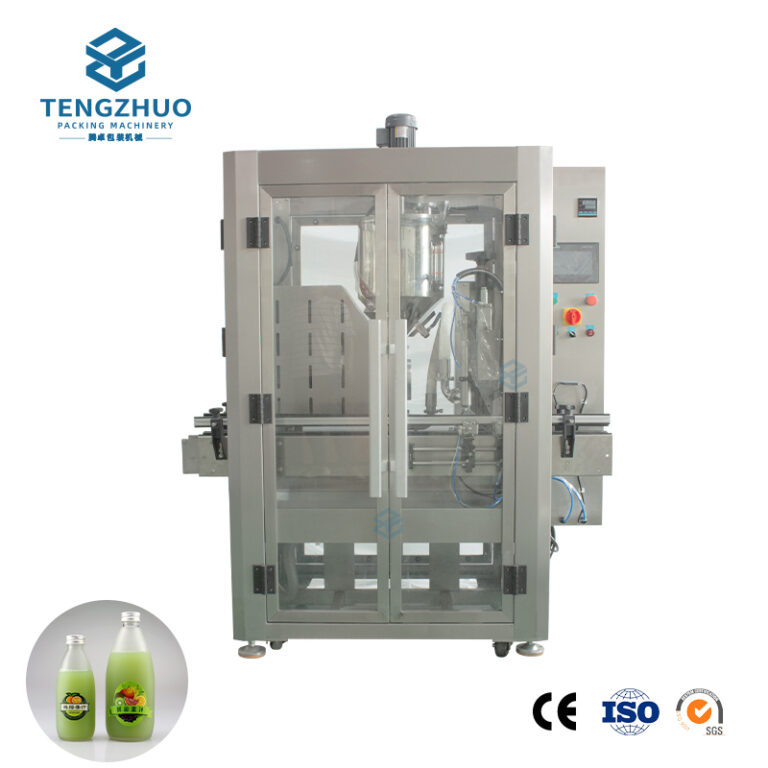
How Does the Filling Process Work?
The process moves containers into position, dispenses a precise amount of product using a specific metering method, and sends them downstream, often with built-in quality checks.
Product Loading & System Setup
- Product Loading: Bulk product is loaded into the machine’s supply tank or hopper.
- Parameter Setup: Operators configure key settings via the HMI/control panel, including target volume, weight, and filling speed.
- Mechanical Adjustments: Components like nozzle height and guide rails are adjusted to fit the specific container size.
Container Infeed & Positioning
- Automated Transport: Conveyors move empty containers to the filling station, where infeed screws or star wheels align them accurately.
- Smart Detection: Built-in sensors verify container presence, triggering the “No Container, No Fill” safety feature to prevent spills and product loss.
Product Metering & Dosing
- Precision Dosing: The system dispenses product using targeted metering methods (e.g., volumetric pistons or load-cell weight sensors).
- Foam Reduction: Optional “Bottom-Up Filling” lowers nozzles into containers to minimize splashing and foam generation.
- Anti-Drip Control: Fast-acting shut-off valves seal instantly at the target volume to stop liquid dripping.
Container Outfeed & Quality Control
- Quality Assurance: Integrated checkweighers or vision sensors inspect every container to maintain high accuracy and consistency.
- Downstream Transfer: Filled containers move seamlessly along the conveyor toward downstream equipment like cappers and labelers.
Types of Filling Machines by Product Type
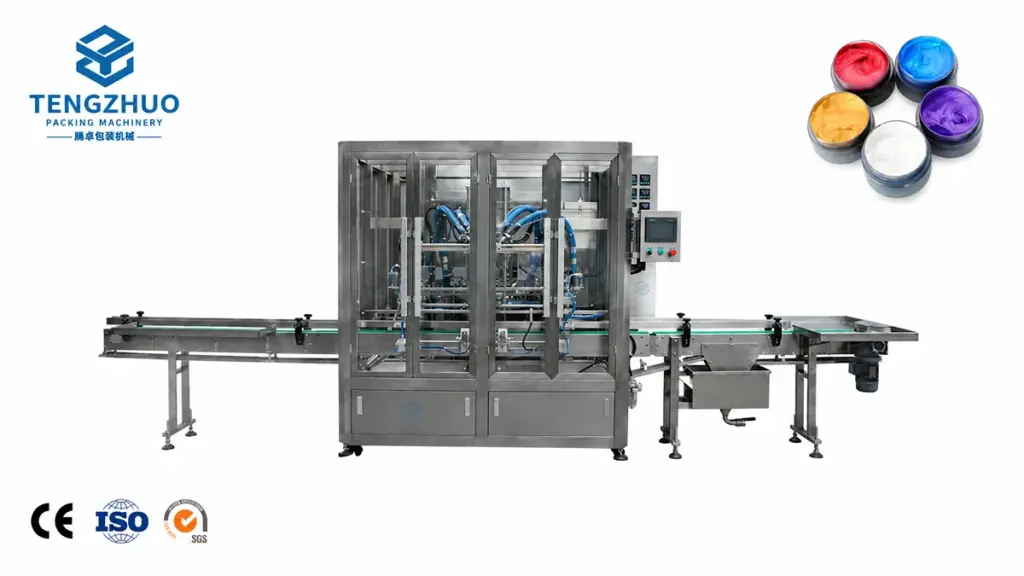
Choosing the right filling machine comes down to your product’s physical state. The equipment for a liquid is fundamentally different from what you’d use for a powder or paste.
Filling machines are not one-size-fits-all. The core design of the machine is dictated entirely by the product you need to package. Whether you’re dealing with water-thin liquids, thick pastes, fine powders, or solid granules, there’s a specific technology designed to handle its unique flow characteristics, dosing requirements, and challenges.
Filling machine accuracy is affected by factors such as the dosing system, product viscosity, temperature changes, density variations, nozzle design, container positioning, control system performance, and regular maintenance. Proper calibration and suitable machine selection help maintain consistent filling results.
| Machine Type | Product Behavior | Common Dosing Method | Typical Industries |
|---|---|---|---|
| Liquid Filler | Flows freely to moderately viscous | Gravity, Piston, Pump, Flow Meter | Beverage, Chemical, Personal Care |
| Paste Filler | Thick, semi-solid, does not flow easily | Piston (Positive Displacement) | Food, 화장품, 제약 |
| Powder Filler | Fine dry solids, can bridge or dust | Auger, Net Weight | Food, Pharma, Nutraceuticals |
| Granule Filler | Free-flowing solid particles | Volumetric Cup, Weigher | Agriculture, Food (Snacks, Grains) |
액체 충전 기계
Liquid filling machines are designed for products with different flow characteristics, from low-viscosity liquids such as water and beverages to thicker materials like oils and detergents. Understanding the different types of filling machines and their selection criteria helps manufacturers choose the right liquid filling solution based on product properties, container type, and output requirements.
Depending on the product requirements, they use filling methods such as gravity, volumetric dosing, pumps, or flow meters to achieve consistent filling accuracy. Anti-drip nozzles and precise control systems help reduce product loss and maintain clean filling operations.
페이스트 충전 기계
Paste filling machines are developed for high-viscosity products that cannot flow easily, including sauces, creams, gels, and adhesives. Most systems use positive displacement technology, such as piston fillers, to transfer a fixed amount of product into containers. This method provides accurate dosing and reliable performance for industries where product consistency is important, including food, cosmetics, and pharmaceuticals.
분말 충전 기계
Powder filling machines are used for dry products such as flour, coffee, spices, and chemical powders. Auger filling systems are commonly used to measure and dispense powders through a rotating screw mechanism, while weight-based systems provide higher accuracy for products with changing bulk density. These machines are designed to manage challenges such as dust control and uneven powder flow during production.
과립 충전물 기계
Granule filling machines handle free-flowing solid products such as sugar, salt, seeds, nuts, and fertilizer. Depending on the product characteristics, they use volumetric cups or weighing systems to achieve accurate portioning. Factors such as particle size, shape, and flowability determine the most suitable filling method to maintain consistent package weights and reduce material waste.
Manual, Semi-Automatic, and Automatic Operation
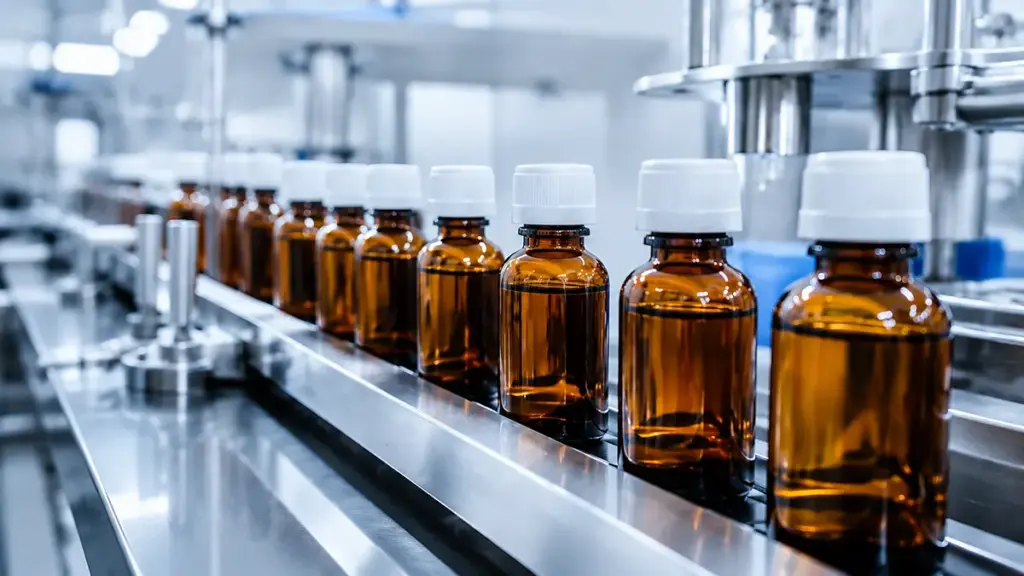
A filling machine’s automation level affects production speed, labor requirements, and investment cost. The right choice depends on factors such as production volume, product type, and operational needs.
Manual Operation
Manual filling machines require operators to handle most steps, including container placement and filling control. They may use simple mechanisms such as hand-operated pistons, levers, or gravity filling systems. Since the process relies heavily on operator input, filling consistency depends on the operator’s experience and accuracy.
These machines are commonly used for small-scale production, testing, sampling, or applications with limited output.
Semi-Automatic Operation
Semi-automatic filling machines automate the dosing process while operators manually load and remove containers. The filling cycle is usually started through a foot pedal or control button, allowing more consistent dosing compared with manual filling.
This type of machine is suitable for small to medium production runs that require higher efficiency without the investment of a fully automated line.
Automatic Operation
Automatic filling machines perform the filling process with minimal operator involvement. Conveyors, sensors, and PLC control systems work together to transport containers, complete filling cycles, and maintain consistent production speeds.
These machines are typically integrated with other packaging equipment, such as capping and labeling systems, for medium to large-scale manufacturing.
Comparing Operation Modes
| Factor | Manual | Semi-Automatic | Automatic |
|---|---|---|---|
| Throughput | Low | Medium | High |
| Labor Requirement | Highest | Moderate | Lowest |
| Investment Cost | Lowest | Medium | Highest |
| Flexibility | High for small batches | Balanced | Best for continuous production |
Where Filling Machines Are Used
Filling machines are the backbone of packaging lines in nearly every major sector, from food and pharma to cosmetics and chemicals, ensuring products are dosed accurately and safely.
| Industry | Common Products | Filling Applications |
|---|---|---|
| Food and Beverage | Water, juice, soft drinks, sauces, jams, dairy products, flour, sugar, coffee | Liquid filling, paste filling, and powder dosing for bottles, cans, cartons, bags, and pouches |
| Pharmaceutical and Medical | Syrups, injectable solutions, creams, ointments, gels | High-precision filling for bottles, vials, syringes, tubes, and sterile containers |
| Cosmetics and Personal Care | Shampoos, lotions, serums, creams, perfumes, liquid soaps | Filling products with different viscosities into bottles, tubes, and jars while maintaining product appearance |
| Chemical and Household Products | Detergents, cleaners, lubricants, solvents, paints | Filling liquids into bottles, cans, drums, and IBC containers with suitable safety configurations |
| Agricultural and Automotive | Fertilizers, pesticides, motor oils, lubricants, seeds, animal feed | Liquid filling and granule dosing based on product characteristics and packaging requirements |
How the Four Product Categories Differ
A filling machine’s design depends largely on the physical characteristics of the product being filled. Liquid, paste, powder, and granule products require different dosing methods, accuracy controls, operating speeds, and cleaning procedures.
| Product Type | Metering Method | Accuracy Factors | Speed & Cleaning Considerations |
|---|---|---|---|
| Liquid | Gravity, pump, flow meter, or volumetric filling systems | Affected by viscosity, container variation, and filling method (volume, level, or weight) | Usually the fastest filling process; cleaning requirements depend on product properties and may include CIP systems |
| 반죽 | Positive displacement systems, mainly piston fillers | Affected by viscosity changes, temperature, and trapped air bubbles | Generally slower due to high viscosity; cleaning and changeover require more time because of sticky residues |
| 가루 | Auger fillers or net weight filling systems | Bulk density changes can affect accuracy, especially in volumetric filling | Requires dust control and proper containment to reduce contamination between batches |
| Granule | Volumetric cups or weighing systems | Particle size, shape, and flow characteristics influence dosing accuracy | Speed varies by filling technology; weighing systems provide higher precision for irregular particles |
자주 묻는 질문
What is a filling machine?
A filling machine is industrial packaging equipment that measures and dispenses a specific amount of product into containers such as bottles, jars, cans, pouches, or tubes. It uses different dosing methods to handle liquids, 분말, granules, and pastes while improving filling accuracy, 속도, 그리고 일관성.
How does a filling machine work?
A filling machine works by transferring products from a supply tank or hopper into containers through a controlled dosing system. Containers are positioned under filling nozzles, the machine dispenses a preset amount based on volume or weight settings, and filled containers move to the next packaging process.
What are the main types of filling machines?
The main types of filling machines include liquid filling machines, paste filling machines, powder filling machines, and granule filling machines. They can also be classified by automation level, including manual, semi-automatic, and automatic filling systems, depending on production requirements.
What products can a filling machine handle?
Filling machines can handle a wide range of products, including liquids such as water, beverages, and chemicals; pastes such as sauces, creams, and gels; powders such as flour and coffee; and granules such as seeds, sugar, and fertilizer. The suitable machine depends on product characteristics and packaging requirements.
How do I choose a filling machine?
Choosing a filling machine requires evaluating factors such as product viscosity, filling volume, container type, required production speed, accuracy requirements, and automation level. The right filling technology should match both the product properties and the overall packaging process.
What affects filling machine accuracy?
Filling machine accuracy is affected by factors such as the dosing system, product viscosity, temperature changes, density variations, nozzle design, container positioning, control system performance, and regular maintenance. Proper calibration and suitable machine selection help maintain consistent filling results.
What information is needed for a filling machine quote?
To receive a filling machine quote, manufacturers typically need information about the product type, viscosity, container size and material, filling volume, required output speed, accuracy expectations, automation level, and any integration requirements with other packaging equipment.
최종 생각
Selecting a filling machine is a technical decision that depends on your product properties, container specifications, required output, and production environment. The right filling system helps maintain consistent dosing accuracy, improve operational efficiency, and ensure reliable performance throughout the production process.
Don’t guess on the right technology for your product—verify it. Our engineering team can evaluate your requirements and recommend a suitable filling solution based on your application. Contact us to discuss your project details and receive a customized quotation.

계속 읽기
포장 기계 전문가의 더 많은 통찰력을 살펴보세요
Semi-Automatic vs. Automatic Can Seaming Machines: What Is the Difference?
Compare semi-automatic vs. automatic can seamers by labor, output, changeovers, footprint, and line integration. Choose the right system—request a quote.
기사 읽기
Types of Capping Machines and How to Choose the Right One
Compare the main types of capping machines, including screw, snap, vacuum, ROPP, and crown cappers. Match your closure and output—request a solution.
기사 읽기
Shrink Sleeve Labels vs. Pressure-Sensitive Labels: What Is the Difference?
Compare shrink sleeve vs. pressure-sensitive labels by coverage, design, equipment, durability, and changeovers. Choose the right labeling system for your line.
기사 읽기포장 라인을 업그레이드할 준비가 되었습니다?
무료 상담 및 맞춤형 장비 제안을 위해 당사 엔지니어에게 연락하세요. 24 시간.
무료 3D CAD 라인 레이아웃 디자인을 받아보세요
- 공장 직접 가격
- 빠른 처리 시간
- 최상위 글로벌 구성 요소
- 전용 판매 후 지원


