Capping Pumps, Sprayers, and Droppers: What Changes?

A pump dispenser is not a large cap and a dropper is not a small one. Each adds a part not designed to be gripped, pushed, or torqued: a pump body with a stem and a dip tube hanging below it, a trigger with a lever that catches on guide rails, a glass pipette seated in a collar that must be tightened around it. The capping problem changes from “apply torque to a thread” to “apply torque to a thread without damaging, tilting, or displacing a mechanism above it.”
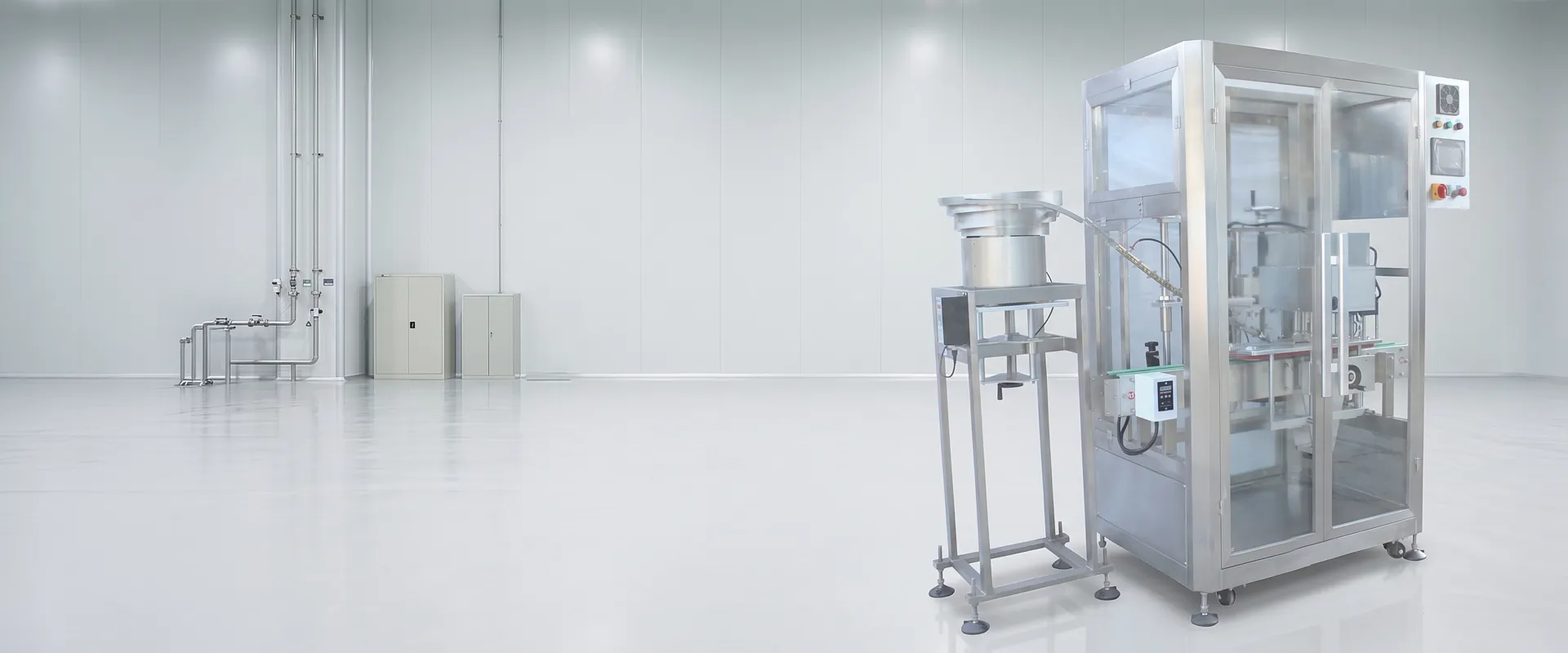
Tengzhuo’s screw capping range lists pump heads and dropper assemblies among the closures its inline, spindle, and rotary systems handle, and names lotion pumps, trigger sprays, and glass dropper caps as applications built around specialized orienting and pressing. Those statements are a supplier’s claims about its own machines, so this article covers what changes in feeding, placement, container control, tightening, and appearance, and the package data a buyer must supply before any of it is tested on their own bottles. It does not promise that one machine handles every closure without change parts, and it does not repeat the general comparison of capping machine types.
- Closure height, diameter, asymmetry, and protruding components can all affect feeding, placement, gripping, and change-part requirements.
- Feed and orientation are separate engineering from tightening; a sorter designed for flat caps may not reliably orient a trigger sprayer.
- The dip tube and the pipette are the parts you cannot see failing. Specify how they are checked.
- Trial with your closures, your bottles, and your appearance standard—documented, not observed.
How Do Pumps, Sprayers, and Droppers Differ from Flat Screw Caps?
A flat screw cap is a single molded part whose functional surfaces all face the container. The four families below break that assumption in different places, and each break lands on a different station.
| Closure family | What is different | What it changes on the machine |
|---|---|---|
| Lotion pump dispenser | Tall, with a fragile actuator above and a dip tube below the closure. | Head clearance, orientation, and a gripped surface that must not be marked. |
| Trigger spray | Asymmetric: a lever and nozzle protrude sideways from the closure axis. | Sorting and chute design, plus rail geometry that the lever cannot catch on. |
| Glass dropper assembly | A pipette is held in a collar, often with a separate overcap or bulb. | Assembly order, controlled torque on a small-diameter collar, glass handling. |
| Child-resistant closure | Function depends on rib engagement and on the closure being fully seated. | Tightening window and verification, not just speed. |
Two consequences follow. First, the closure is an assembly, so its own variability—collar fit on the pipette, pump thread form, liner seating—decides whether the machine can succeed. Second, the customer experiences the actuator, not the thread: a tilted pump or a scuffed collar is a failed application even when the seal is sound. Three failure modes matter more than throughput: a tilted closure, a marked skirt or actuator, et a displaced dip tube or pipette—none of them visible on a torque reading.
Regulatory scope sits upstream of all of this but does not follow from the shape of a cap. For products subject to child-resistant or special-packaging rules, confirm the applicable market, formulation, package type, and test protocol with the responsible regulatory team; closure architecture alone does not determine compliance, and the special-packaging rules at 16 CFR §1700.14 apply to listed substances and packaging conditions rather than to every pump or spray package.

How Can Closure Shape Affect Feeding and Orientation?
A vibratory bowl sorts by shape and center of gravity. Flat caps cooperate; pumps, triggers, and dropper collars do not. The screw capping process article covers the sorter families in detail, and its conclusion applies here: irregular closures such as trigger sprayers, dispensing spouts, and flip-tops point to wheel or pocket sorters, which carry each unit in a shaped pocket instead of standing it up in a bowl.
For pumps and sprays, Tengzhuo states that specialized sorting bowls and orientation chutes are designed for the closure in question, and that a manual cap-loading capping machine is offered for lines where the operator places each closure and the machine tightens it. The two arrangements may require different feeding setups and change parts. The automatic route buys throughput and inherits an orientation mechanism that must be maintained, cleaned, and re-set at every change. Manual pre-placement generally reduces automation and may limit output, but it removes that failure mode outright—often the right trade for a cosmetics line running short runs of many SKUs.
Four shape measurements decide whether a feed works, and all four belong in writing before a quotation: the closure diameter, which sets the slot, pocket, and chuck or wheel range the head can hold; the working height of the cap itself, since a tall dropper collar needs a gripper that closes along its side wall rather than on an actuator; whether any feature protrudes sideways; and whether the closure can bridge or nest inside another in the chute. A dropper collar that stacks two-deep is picked up as one; a trigger whose lever hits the chute wall presents at an angle. Elevator and chute timing are then checked against the presentation the head needs—a tilted cap is a placement fault, not a torque fault.
Why Do Placement and Thread Engagement Matter?
Some pump, spray, and dropper closures have limited thread engagement—the short run of thread that engages before the collar bottoms out—which leaves less room to correct a cap that landed off-center: a cocked start cross-threads the closure or leaves the liner uncompressed. Thread design is not uniform across these families, so take the actual engagement from the closure and neck-finish drawings rather than from an assumption about the format. On a pump a cross-started closure usually still looks correct, which is why the fault surfaces at the customer’s hands rather than on your line.
Thread geometry is fixed by those drawings; placement height is the machine-side variable. The head must descend far enough to grip the closure’s working surface without pressing the actuator or the pipette, and that stroke changes with every closure height you introduce. Tengzhuo states that over 90 % of height and width adjustments on its cappers run through scaled handwheels without tools, and that format changeovers take minutes; the scale reading is the point. Record the reading per format, and a tilt complaint after a changeover becomes a number to compare.
Engagement then has to be verified, not assumed. A presence check downstream of the head confirms a cap is there and roughly square; it does not confirm the closure is functional. For child-resistant and dropper formats, add a check that measures something the failure actually affects—removal torque at an agreed interval, or a push-down-and-turn test on sampled units—because both can pass a presence sensor while failing in use. Where formal special-packaging testing under 16 CFR §1700.20 applies, follow the package-conditioning and test procedure written into that rule—it governs packages prepared for the test protocol, not your conveyor. Routine production torque checks run on the interval set by your closure supplier and the agreed quality plan, and that interval belongs in writing: removal torque changes in the first minutes after capping, so a number taken at an undocumented elapsed time cannot be compared with anyone else’s.
How Should Bottles Be Supported During Capping?
During tightening the container must stay stable enough to resist rotation and lateral movement. The support required depends on closure torque, bottle geometry, wall strength, fill weight, and the capping-head design—and if the bottle spins, the closure is under-torqued while the head reports a completed cycle. The shapes here make it worse: a round bottle with a square shoulder, a faceted perfume pack, a slim serum bottle with a tall dropper collar, and a filled pump bottle with a high center of gravity all resist rotation differently.
Tengzhuo addresses this with dual synchronous side belts that grip the bottle body to stop it turning during tightening, explicitly including irregular shapes, plus base support raised into the container. Specify the grip arrangement against your worst case: the tallest bottle, the smallest base footprint, and the highest torque format. Closure diameter belongs in that brief too, because it sets the chuck or spindle range that holds the cap while the head turns it.
Two support details get missed in trials. Guide-rail width must hold a filled bottle without deforming a thin-walled one, and head-to-conveyor alignment must be re-checked after the rail change. On glass dropper formats base support is also breakage control: a pipette collar tightened against an unsupported bottle transfers load into the neck finish.
What Can Affect Closure Damage and Final Tightness?
Appearance and tightness trade against each other at the contact surfaces, which is why grip material matters. Metal tooling can leave witness marks on decorated skirts, and Tengzhuo specifies imported silicone capping wheels and chucks that hold the closure without marking it, and describes servo-driven heads applying pumps, sprays, and acrylic perfume caps with minimal scratching. The trade-off to test, not trust: a softer grip protects an electroplated skirt but slips at high torque, costing tightness where the cosmetic result looks cleanest.
On the tightening side, mechanical clutch systems may require regular adjustment and wear checks, while servo-based systems can provide more programmable control, depending on the machine design. With a servo head, ask what the displayed number actually represents: depending on the control design it may be a programmed torque, a current or torque estimate, or a position or rotation limit, and the supplier should explain which one and how it is verified against measured removal torque. A stop limit protects the closure from over-torque, but it does not tell you the setpoint is right. Appropriate application and removal torque depends on closure diameter, thread design, liner or seal construction, materials, finish, and the closure supplier’s specification—a value that suits a wide jar lid sits far outside what a small dropper collar takes, so the target comes from the supplier’s specification for that collar and finish, not from diameter alone. ASTM D2063/D2063M-24 measures removal torque for continuous-thread closures under stated conditions over time; use it as the reporting method. Fix the elapsed time in writing as part of the plan: closure makers’ published intervals run in minutes—Silgan reads removal torque at least 10 minutes after capping on cold fills and within one minute on hot fills—and that bulletin covers food and beverage closures rather than pumps, so ask your own closure maker for the figure that applies to yours.
| Risk | How it shows up | Design response to specify |
|---|---|---|
| Marked or scuffed closures | Shiny bands on a skirt, witness marks on an actuator face. | Grip material and contact width, judged on your own caps. |
| Tilted pump or sprayer | Closure square to the eye at the head, off-axis once the label is read. | Chute presentation, head stroke, and rail width as one setup. |
| Displaced dip tube or pipette | Unit seals correctly and dispenses nothing on first use. | Assembly order, pre-placement, and a sampled functional test. |
| Under-torque from grip slip | Good cosmetic result, low removal torque at the agreed interval. | Torque measured on the run, not only the setpoint logged. |
What Should Buyers Provide for a Closure Trial?
A trial answers one question: can this machine hold your torque and your appearance standard on your package, at your speed, after changeover. Tengzhuo states that acceptance testing runs with the customer’s actual bottles, pumps, casquettes, and product before shipment, and invites a closure photo plus the required speed as the starting brief. Both are sensible; neither is sufficient. The table below is the shortest defensible path.
| Stage | What to lock down | Why it matters |
|---|---|---|
| Before the enquiry | Closure drawings with cap diameter, actuator height and dip-tube length, the neck-finish designation that fixes thread form, target output. | Shape data decides feed type; without it a quote is a guess. |
| In the sample pack | Two lots of closures and bottles, filled product or a surrogate, plus your worst accepted units. | A clean lot hides the failure production will show. |
| On the appearance standard | A written, photographed limit for marks on the closure you will reject. | Grip choice trades cosmetics against torque; both parties need the same limit. |
| During the run | Applied torque logged, removal torque at one agreed interval, tilt and function checks sampled. | Presence checks pass closures that fail in the customer’s hands. |
| At acceptance | Timed changeover across your formats, wear-part inspection, spares list, named reviewer. | Multi-SKU cosmetics and pharma runs live or die on changeover, not top speed. |
Expect the trial to change your feed decision rather than confirm it. A line that changes four pump SKUs weekly may land on manual pre-placement, because a custom bowl and chute for that format mix is a tooling decision worth testing before it is bought. A single-SKU spray line running at speed may justify the custom chute and wheel sorter instead. The trial is where those two answers separate, and it is why the format list, the target output, and the closure drawings should be in the supplier’s hands before anyone proposes a sorter.

Foire aux questions
Can one capping machine handle pumps and regular screw caps?
Sometimes, with change parts and a re-set head—not by switching a parameter. Pumps and triggers need different orientation and head stroke from flat caps, and Tengzhuo’s own guidance is that these closures are handled with specialized bowls, chutes, and pressing mechanisms. The honest question is changeover time and who performs it: time a changeover between your own formats during the trial and compare that with running two stations.
How are long dip tubes managed during cap placement?
By controlling assembly order rather than application force. A tube loose in the closure, or a closure presented at an angle, lets the tube buckle or lift off its seat as the collar starts its thread. Pre-assembling the pump into the closure, pre-placing the assembly by hand on a semi-automatic station, and sampling first-use function on the trial run are the three practical controls. Specify tube length and insertion force on the drawing so the head stroke can be set around them.
Why can pumps tilt or cross-thread during capping?
Because the closure is tall and many of these formats have limited thread engagement. A high center of gravity above the finish means any container rotation tips the closure as the thread engages, and a short engagement run leaves little chance to self-correct an off-center landing. The fixes are in this article already: grip the container, support its base, set head stroke to the actuator height, and present the closure square. Tilt that appears only after a changeover points at the scale reading, not the torque setting.
Can capping parts mark decorative closures?
Oui—electroplated, aluminum, and acrylic cosmetic closures may be more sensitive to visible contact marks, and grip material and contact geometry are what reduce them. Tengzhuo specifies imported silicone wheels and chucks for this reason. A grip soft enough to protect a mirror finish can slip at high torque, so judge both defects on your own caps, against a written appearance limit, at your production torque.
What bottle and closure samples are needed for testing?
Two lots of each closure and bottle, including the worst units you would still ship, enough filled product or surrogate to reproduce real weight and center of gravity, and the overcap if the assembly has one. Include your torque target and appearance limit in writing, with photographs. Samples should represent normal production variation rather than only ideal units.
Final Thoughts
Pumps, trigger sprayers, and droppers require more than a suitable torque setting. Feeding method, closure orientation, placement height, container support, gripping surface, and inspection criteria should all be matched to the actual bottle-and-closure combination.
Before selecting a capper, provide the supplier with closure drawings, bottle samples, target output, torque requirements, and acceptable appearance limits. Tengzhuo can use these details to recommend a feeding and capping configuration for trial with your production package.

Continue Reading
Explore more insights from our packaging machinery experts

Wrap-Around, Front-and-Back, and Flat-Surface Labeling Compared
Pressure-sensitive labeling splits by how the container moves and where the label datum sits. Compare the three methods, then send the samples a quotation needs.
Read Article
How Powder Flowability Affects Auger Filling
Air trapped between particles is why powders bridge, compact, and segregate. How flowability drives auger selection, testing, and what to send with an enquiry.
Read Article
Shrink Sleeve Defects: Wrinkles, Distortion, and Label Jams
Sleeve defects sort into four groups: shrink, position, feed, and heat damage. The evidence to collect before any tunnel or applicator setting gets changed.
Read ArticleReady to Upgrade Your Packaging Line?
Get in touch with our engineers for a free consultation and tailored equipment proposal within 24 heures.
Obtenez une conception de disposition de ligne CAO 3D gratuite
- Prix directs en usine
- Délai d'exécution rapide
- Composants mondiaux de premier plan
- Support après-vente dédié


