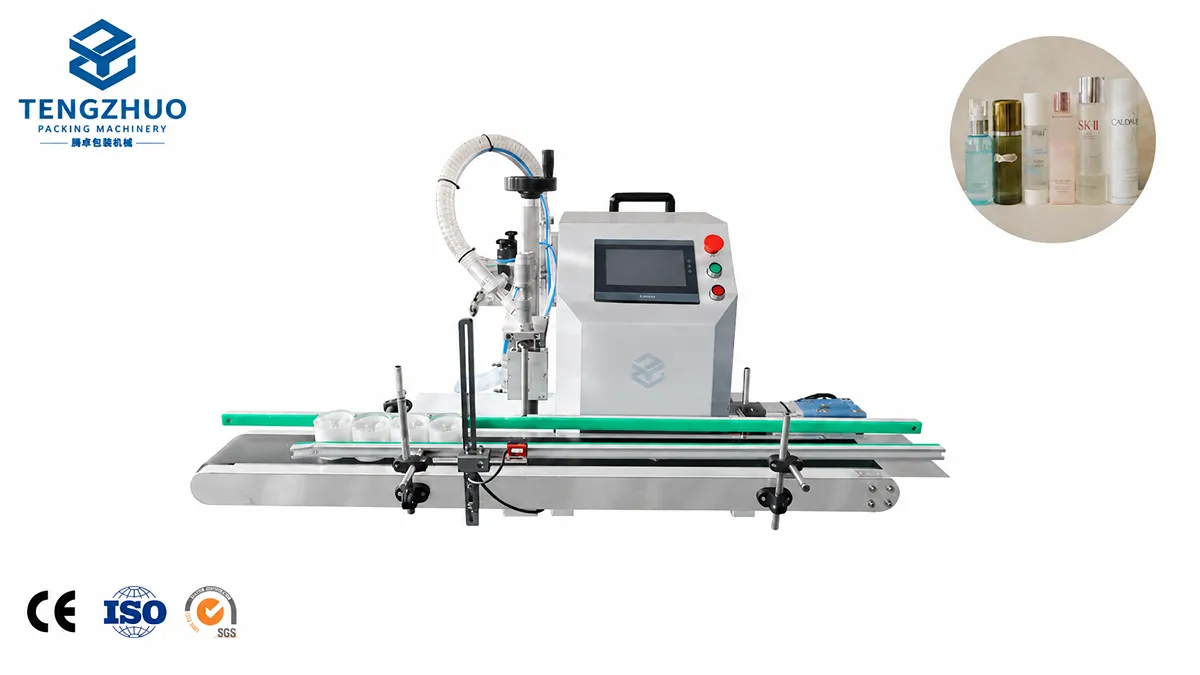
A filling machine accuracy test helps buyers confirm whether the equipment can meet the agreed fill target under representative production conditions. It can identify systematic overfilling, underfilling, inconsistent output, and differences between filling heads before these problems lead to product waste, rejected packages, or production delays.
This guide explains how to define test conditions, measure filled quantity, plan sampling, evaluate accuracy and repeatability, record results, and respond when the equipment misses the agreed requirements.
A filling accuracy test should confirm that the machine can meet the agreed fill target and repeatability requirements with the specified product, container, operating speed, and machine configuration.
The test should compare the measured net quantity with the target defined in the acceptance protocol. Results may be assessed using the average fill, individual measurements, or both, depending on the contract and applicable net-content requirements.
Key checks include:
Equipment acceptance limits are not automatically legal net-content limits. Buyers must separately confirm the regulations that apply to the product and destination market, such as the EU net-content rules for prepackages (Directive 76/211/EEC).
Accuracy describes how close results are to the target, while repeatability describes how consistent the individual fills are. A machine can produce an acceptable average while still showing excessive variation between containers.
The test should therefore record consecutive measurements and evaluate their spread using an agreed method, such as the range, standard deviation, or relative standard deviation. If startup, normal running, or restart performance is part of the purchase specification, samples should be collected during those operating states.
On a multi-head filler, results should be linked to the filling head that produced each sample. A combined average can conceal a head that consistently dispenses more or less product than the others.
Head-specific data shows whether variation comes from an individual nozzle, pump, valve, or adjustment, and lets corrective work focus on the affected position.
The test conditions should reflect the intended production application as closely as practical. Relevant variables may include the actual product, container, fill volume, operating speed, product temperature, tank level, and replenishment method.
The protocol should also state whether measurements cover steady operation only, or also startup, planned stops, and restarts.
Before testing begins, the buyer and supplier should agree on the product, container, target quantity, operating conditions, measurement method, sampling plan, and acceptance criteria.
Document the following conditions before testing to define the application, measurement process, and acceptance rules.
| Test Item | What Should Be Defined | Why It Matters |
|---|---|---|
| Product | Product type, temperature, viscosity, density, foaming behavior, and particulate content | These properties affect flow, dosing, nozzle cutoff, and measurement |
| Fill Target | Nominal weight or volume and the agreed machine-performance limits | Establishes the target and the basis for the acceptance decision |
| Container | Material, dimensions, neck opening, rigidity, and production tolerances | Affects nozzle positioning, splashing, tare variation, and handling |
| Machine Setup | Filling method, nozzles, pumps, filling heads, tooling, and recipe | Identifies the exact machine configuration covered by the test |
| Measurement | Weight, direct volume, or density-based conversion, including the calculation method | Defines how the actual filled quantity will be determined |
| Instruments | Instrument type, resolution, calibration status, and tare procedure | Supports consistent and traceable measurements |
| Acceptance Rules | Individual limits, average result, repeatability criteria, and approval method | Prevents the pass-or-fail rules from being reinterpreted after testing |
If a substitute product, prototype container, or alternative measurement method is used, the deviation should be agreed and recorded before testing, along with whether later testing with production materials is required.
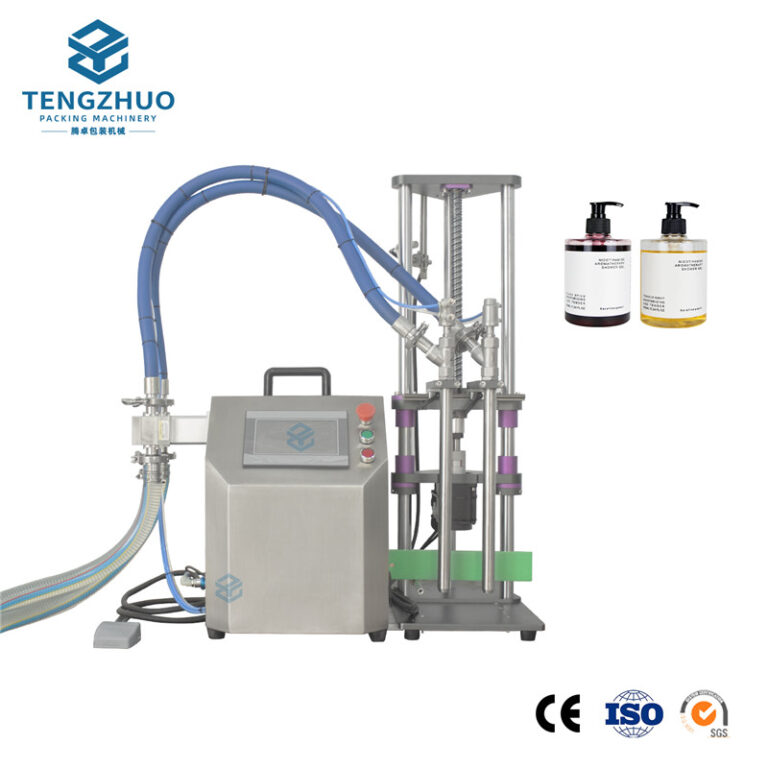
Testing with the intended product and production container provides the most representative evidence of filling performance. When this is not practical, any substitute material should be documented and shown to reproduce the relevant filling characteristics.
Viscosité, density, temperature, foaming tendency, particulate content, and entrained air can all affect how a product moves through pumps, valves, hoses, and nozzles. These properties may influence dosing time, flow stability, cutoff behavior, dripping, and the final quantity delivered.
Water may be suitable for preliminary mechanical checks, but it may not represent the behavior of a viscous cream, aerated liquid, sauce, or product containing suspended solids. Final acceptance testing should therefore use the production product whenever practical or an agreed substitute with comparable characteristics. For filling principle by product form, see how to choose a filling machine.
Container dimensions and material can also influence test results. The neck opening, internal shape, rigidity, and dimensional tolerances may affect nozzle positioning, splashing, back pressure, fill height, and tare-weight variation.
Testing with production-grade containers also checks whether the handling system positions and transports them consistently; final confirmation should use representative production samples whenever available.
The filler should be evaluated under the operating conditions defined in the purchase specification. These may include the required production speed, normal product temperature, expected tank-level range, product replenishment, and planned stops or restarts.
A controlled preliminary test can establish initial settings but does not replace a representative production run; the protocol should distinguish preliminary trials from results used for formal acceptance.
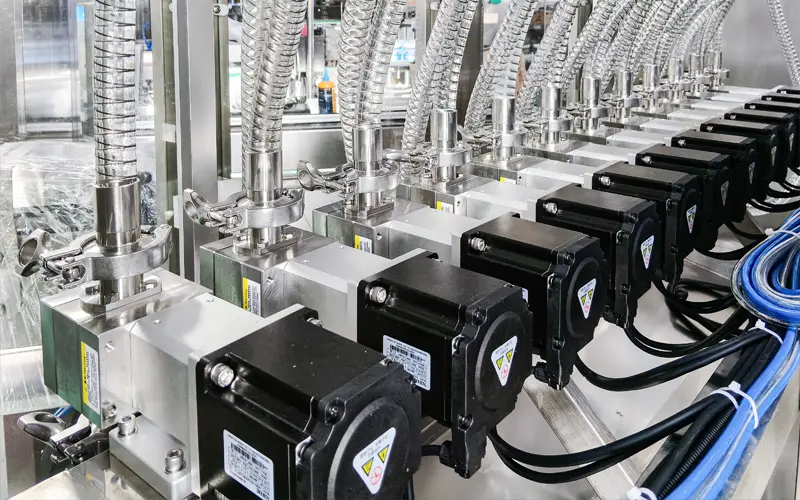
Weight and volume measurements can both be appropriate. The method should match the declared quantity, product characteristics, required precision, available instruments, and applicable test procedure.
Gravimetric testing determines the net mass by weighing the container before and after filling. It is commonly used because calibrated balances can provide repeatable, traceable measurements without relying on the container’s shape or fill-level markings.
When a product is declared or specified by volume, measured mass may be converted to volume using an agreed density value:
Net volume = Net mass ÷ Product density
The protocol should define how density is measured and the temperature at which the value applies, because both can affect the conversion.
Direct volumetric testing may use calibrated vessels, container markings, or another approved method to determine the delivered volume. It can be appropriate when volume is the specified quantity or when visible fill level is an important packaging requirement.
Its suitability depends on the required precision, product behavior, reading method, and measurement equipment. Foam, trapped air, meniscus interpretation, product residue, and temperature can introduce additional variation.
Use the unit and method agreed upon in the acceptance protocol. Gravimetric measurement is often practical for equipment testing, but it should not automatically be treated as the only acceptable method.
Before testing begins, the buyer and supplier should document:
Legal net-content verification may require a different sampling or evaluation procedure from machine-performance testing. Buyers should confirm the requirements that apply to their product and target market.
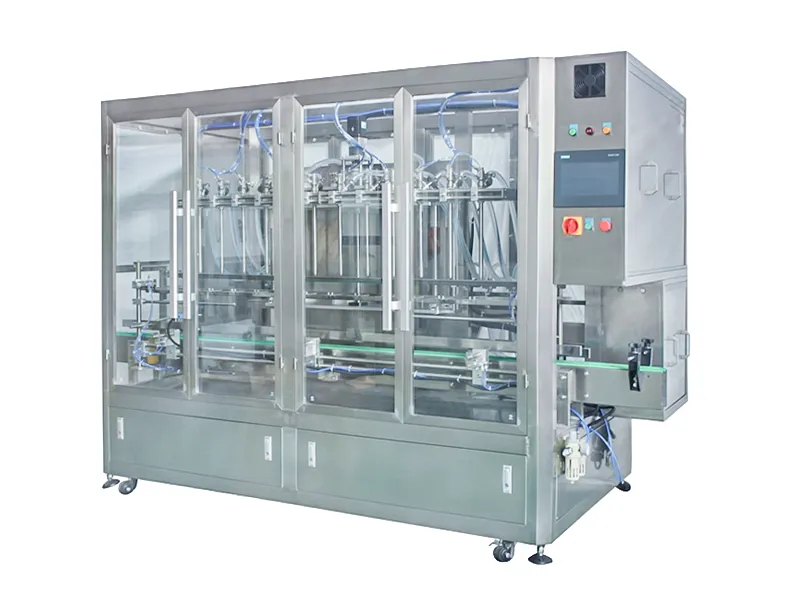
The sampling plan should reflect the purpose of the test, number of filling heads, expected process variation, and agreed acceptance criteria. There is no single sample size suitable for every filling machine.
A routine production check, factory acceptance test, site acceptance test, and process qualification do not necessarily require the same sampling plan. Before deciding how many containers to measure, the buyer and supplier should define what the test is expected to demonstrate.
The plan should state:
The sample size should be large enough to reveal meaningful variation without being a universal requirement. Factors include head count, expected fill variation, product value, measurement uncertainty, test duration, and contractual or regulatory requirements.
For a multi-head machine, the plan should include sufficient results from every head rather than relying only on a combined line average. If formal statistical analysis is required, the sample size and analysis method should be agreed upon by personnel qualified to define the test protocol.
Some machines or products require priming, recirculation, temperature control, or a stabilization period before representative results; the required conditions depend on the filling technology and product behavior rather than a fixed cycle count.
The protocol should define when official data collection begins, how startup fills will be treated, and whether the test will include more than one run. These decisions should be recorded before testing starts so that results are not selectively included or excluded afterward.
Accuracy and repeatability should be evaluated separately for each filling head using predefined calculations, traceable measurements, and agreed acceptance criteria.
| Evaluation Area | What Should Be Checked |
|---|---|
| Accuracy | Compare the average measured quantity with the agreed target fill to identify systematic overfilling or underfilling. |
| Repeatability | Evaluate the variation between consecutive fills using an agreed measure such as range, standard deviation, or relative standard deviation. |
| Head-to-Head Variation | Review results from each filling head separately to identify nozzles, pumps, or valves that perform differently from the rest. |
| Test Conditions | Record the product, container, fill target, operating speed, machine settings, temperature, and other conditions that may affect performance. |
| Measurement Control | Document the instrument, resolution, calibration or verification status, tare procedure, and any density conversion used. |
| Acceptance Decision | Compare the calculated results with the limits defined in the purchase specification, FAT/SAT protocol, or applicable quality procedure. |
Accuracy and repeatability answer different questions: a machine can average near target yet vary widely, or stay consistent while sitting above or below target, so both need review.
Process-capability indices such as Cp or Cpk may be useful when the process is stable and sufficient representative data are available. They should not be treated as mandatory for every equipment test or calculated from a small preliminary sample.
The final record should retain raw measurements and identify the filling head for each sample, separating an isolated head issue from a system-wide one involving product supply or settings.
A failed result should be handled according to the type of test. The buyer and supplier should confirm the result, assess its scope, identify the cause, apply corrective action, and repeat the agreed test before approval or production continues.
First verify that the reported failure is valid. Check the measurement instrument, tare procedure, density conversion, sample identification, and data entry before changing machine settings.
The required containment action depends on when the test occurs:
A failed result from one head should not be treated as proof that every head or package is affected; the investigation should determine the actual scope.
Review the failed data by filling head, sequence, and operating condition. The investigation may include:
Machine adjustments should be based on the evidence collected rather than made repeatedly without recording their effect. For why fills drift in routine operation, see what causes filling machine accuracy issues in production.
Corrective action should address the identified cause. It may involve cleaning a nozzle, replacing a worn component, correcting a recipe, stabilizing the product supply, adjusting operating parameters, or revising the test method.
After the correction, repeat the relevant portion of the approved test protocol. The retest should use the same product, container, conditions, measurement method, and acceptance criteria unless a change is formally agreed and documented.
Approval should be based on a sufficient set of consistent results rather than one successful container. If the correction changes a critical component, control program, measurement method, or operating condition, the buyer and supplier should determine whether additional testing is necessary.
The investigation and retest should be documented in a traceable record. At minimum, the record should contain the following information:
| Record Item | Information to Retain |
|---|---|
| Failed Result | Measured value, affected filling head, sample time, and sequence |
| Test Conditions | Product, container, machine settings, operating speed, and measurement method |
| Investigation | Checks performed, evidence reviewed, findings, and identified cause |
| Corrective Action | Adjustments, cleaning, repairs, replaced components, or process corrections |
| Retest | Retest conditions, raw measurements, and comparison with the approved acceptance limits |
| Final Decision | Approval status, remaining actions, responsible personnel, and sign-off |
During equipment acceptance, an unresolved failure should remain open and be handled according to the purchase agreement. During commercial production, decisions about affected product should follow the manufacturer’s quality procedures and applicable requirements.
Define the product, container, target quantity, operating speed, sampling plan, measurement method, and acceptance limits before testing. Run the machine under the agreed conditions, measure the net quantity of each sample, and compare the average result and fill-to-fill variation with the approved criteria. For multi-head machines, record and evaluate results separately for each filling head.
Either method may be appropriate, depending on the declared quantity, product characteristics, required precision, and agreed test procedure. Gravimetric testing determines net mass using a balance. For products evaluated by volume, mass can be converted using a verified density measured at a defined temperature, or volume can be checked directly with suitable equipment. The selected method and calculation rules should be documented before testing.
Calculate each sample’s fill error by subtracting the target quantity from the measured quantity. Percentage error can be calculated by dividing that difference by the target and multiplying by 100. Then calculate the sample mean to identify systematic overfilling or underfilling, and use a measure such as standard deviation to evaluate repeatability. Compare the results with the acceptance limits defined in the approved test protocol.
Filling speed can affect accuracy, but the result depends on the product, filling method, machine configuration, and container handling. Higher speeds may change flow stability, foaming, nozzle cutoff, or the time available for dosing and measurement. Accuracy should therefore be tested at the sustained production speed specified for the application rather than assumed from the machine’s maximum rated speed.
A filling machine acceptance test should define the product, container, fill target, machine configuration, operating speed, measurement method, sampling plan, and acceptance limits. It may also cover filling-head uniformity, dripping, foaming, container handling, startup, or restart performance when these items are included in the agreed scope. The final record should contain the test conditions, instrument status, raw results, deviations, corrective actions, and approval decision.
A filling machine accuracy test is most useful when the product, container, operating conditions, measurement method, and acceptance criteria are agreed upon before testing begins. Reviewing accuracy and repeatability by filling head helps buyers identify variation, verify the selected configuration, and document machine performance before routine production.
Your test plan should reflect the actual application rather than rely on a generic sample size or tolerance. Contact our team to discuss your product, container, fill target, and required output so we can help define a suitable machine configuration and acceptance-testing approach.


