
Loose Screw Caps After Capping: Causes and Checks
Caps tight at the capper and loose at the warehouse are a torque-retention fault. Work package, placement, wear and storage in order, with readings to record.
En savoir plus →Your central knowledge base for the packaging industry. Explore expert advice, deep technical dives, and the latest automation trends designed to fuel your business growth.
Expert guides, technical comparisons, and industry updates to help you choose the right packaging machinery.
Caps tight at the capper and loose at the warehouse are a torque-retention fault. Work package, placement, wear and storage in order, with readings to record.
En savoir plus →
Vacuum capping machines for glass jars: which jars and caps suit the process, how to separate low vacuum from a poor closure, and what a trial must prove.
En savoir plus →
Pumps, sprayers and droppers change feeding, placement, container grip and head contact, not just torque. What to specify, what a trial records, what to send.
En savoir plus →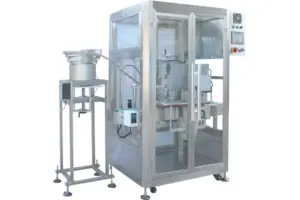
How screw capping works: cap feeding and orientation, placement on the container, chuck vs spindle heads, and how capping torque is applied, supported, and verified.
En savoir plus →
Compare the main types of capping machines, including screw, snap, vide, ROPP, and crown cappers. Match your closure and output—request a solution.
En savoir plus →Can't find the answer you are looking for? Our senior engineers are here to help.


